
REVIEW · MEDELLÍN TOURS
Do Not Say That Name
Medellín’s past is never far away. This four-hour private tour makes the city’s violent cartel era easier to understand, while also showing how Comuna 13 changed through public projects and community work. I like the private transportation and the chance to ask questions without being tied to a large group. I also like the choice of a morning or afternoon departure.
The main caution is simple: this is not a tour packed with preserved crime scenes. Several famous places are gone or changed, and the quality depends heavily on your guide. Some guides, including Juan Carlos and Hector, have been praised for bringing the story to life. One poor experience involved unclear English, thin explanations, and long stretches without useful context.
In This Review
- Key points before you book
- A tour about Medellín, not just one notorious criminal
- Parque Conmemorativo Inflexión and the vanished Monaco building
- Jardines Montesacro, a short cemetery stop
- Parque San Antonio and the turning point in the conflict
- Comuna 13 may be the day’s real highlight
- Why guide quality changes the whole experience
- Is $78 per person good value?
- Timing, comfort, and practical planning
- Who should choose this experience?
- My verdict on this Medellín history tour
- FAQ
- How long does the tour last?
- How much does the tour cost?
- Is the tour private?
- Is transportation included?
- Can I choose a morning or afternoon departure?
- What is the cancellation policy?
Key points before you book
- The old Monaco site is now a memorial: Parque Conmemorativo Inflexión occupies the former site of a notorious building that was destroyed.
- Comuna 13 may become the strongest part: The tour can include escalators, murals, local stories, and the neighborhood’s dramatic social change.
- A private guide matters here: The subject needs chronology and context, so clear English or Spanish communication is important.
- Expect a history lesson, not a museum visit: The gravesite and former house are brief stops, with little original structure left to see.
- The price is $78 per person: That is reasonable for private transport and a bilingual guide, but value depends on the quality of the narration.
- Plan for four hours: Morning and afternoon options make it easy to fit around a Medellín sightseeing day.
A tour about Medellín, not just one notorious criminal
The subject attracts attention because television has made the cartel years familiar to a worldwide audience. But the best version of this tour does not treat that period like a crime-themed photo opportunity. It places the violence within Medellín’s wider story, then shows how the city worked to move beyond it.
That distinction matters. You may arrive expecting a string of famous houses, hideouts, and dramatic scenes. Instead, you will see memorial spaces, a cemetery, a public park, and possibly Comuna 13. The physical evidence is limited because many sites have been demolished, rebuilt, or altered.
I see that as both a weakness and a strength. If you want intact buildings connected to the old cartel, you may be disappointed. If you want help understanding how violence affected Medellín and how communities changed afterward, the tour offers more substance.
The private format gives you room to shape the experience. You can ask about the old gang hangouts, the war against the cartel, the city’s response, or the difference between television drama and documented events. That flexibility is far more useful than simply being driven past locations without explanation.
More things to do in Medellin:
- Medellin: Comuna 13 Graffiti Tour, Cable Car & Street Food
★ 4.8 · 9,046 reviews - Comuna 13 Graffiti Tour with Street Food
★ 5.0 · 7,503 reviews - Museo Pablo Escobar
★ 5.0 · 7,242 reviews
Parque Conmemorativo Inflexión and the vanished Monaco building
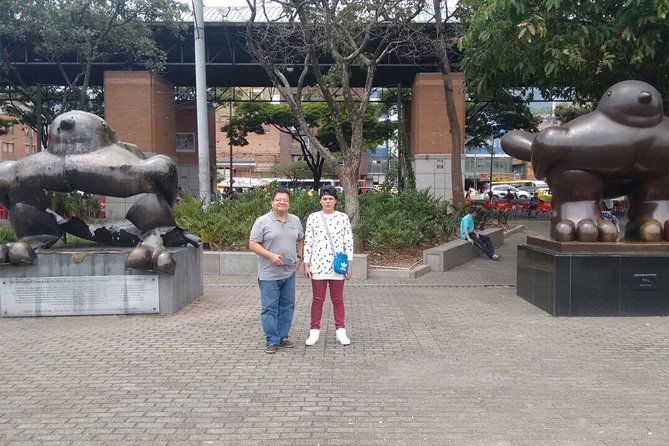
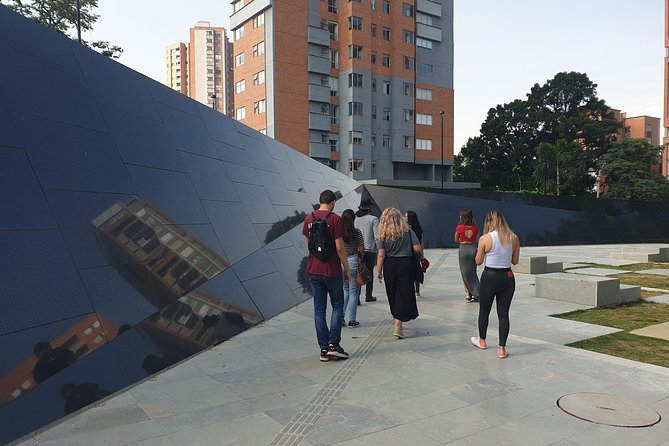
The tour begins with about 15 minutes at Parque Conmemorativo Inflexión. The park occupies the former site of Edificio Monaco, a building associated with pain, violence, and the former cartel leader who once owned it.
The important detail is that the building is no longer there. A car bomb attack connected to the long conflict destroyed the old structure, and the site was later turned into a public memorial. You are visiting a place designed to remember what happened, not entering a preserved residence or headquarters.
I find this stop most useful when the guide explains the memorial’s purpose. The point is not simply where a building once stood. It is how Medellín chose to mark a painful chapter without turning the site into a shrine to criminal power.
Fifteen minutes is enough to look around and hear the basic story, but it is not a long visit. If your guide gives only a few facts, the stop may feel spare. Ask direct questions about the building, the attack, why it disappeared, and what the memorial means to the city today.
The itinerary also refers to a shrine to the Virgin Mary where pilgrims ask for miracles. The exact timing is not specified, so treat this as a possible short visit rather than a guaranteed extended stop. It adds a different layer to the day, shifting from crime history to local religious practice.
Jardines Montesacro, a short cemetery stop
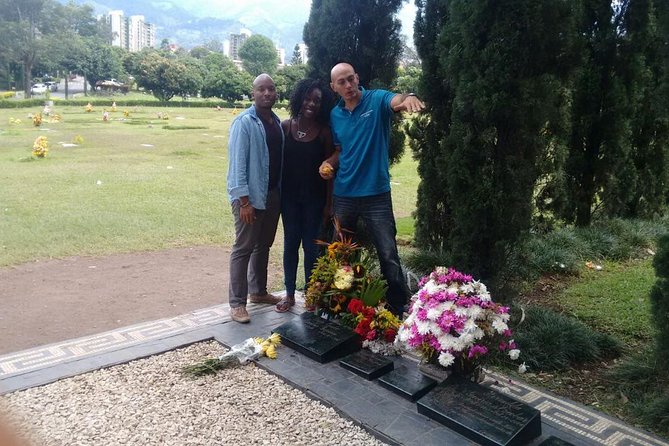
The visit to Cementerio Jardines Montesacro lasts about 20 minutes and includes a short stop at a grave. The cemetery matters because it connects the public story to the people involved in Medellín’s cartel years, but the visit is brief and respectful.
Do not expect a large museum or a long walk through the grounds. The value comes from the guide’s explanation. You need the names, relationships, and sequence of events to understand why the grave matters. Without that context, it is simply a grave in a cemetery.
This is one place where guide quality makes a huge difference. A strong guide can explain the role of the people buried there and place them within the wider conflict. A weak guide may point out the location, offer a sentence or two, and move on.
Some accounts also describe a stop connected with Griselda Blanco, known by the nickname Black Widow. Her story is separate but linked to the same world of organized narcotics crime. If this is part of your visit, ask your guide to explain her role rather than accepting a quick label.
I would keep your expectations measured. The cemetery is valuable for context, not for visual spectacle. It is also a place where a calm, respectful tone matters more than sensational storytelling.
Parque San Antonio and the turning point in the conflict
At Parque San Antonio, the guide explains the change in the war against the cartel. The stop is listed at about 15 minutes, so it is another compact visit built around narration rather than a long activity.
This is the kind of location that can seem ordinary if you do not know what happened there. A guide who gives you a clear timeline can turn a public square into a useful history lesson. You should expect to spend more time listening than looking.
The park also helps connect the old violence to Medellín’s later public identity. The city is not presented only as a place that suffered. The larger theme is how Medellín confronted violence and tried to make public space safer and more useful.
Because the stop is short, ask focused questions. What changed in the conflict? Who was involved? How did ordinary people experience that period? What happened after the main cartel power weakened? The answers will tell you far more than the park itself.
A completely different kind of day:
- Guatapé Tour: Piedra del Peñol with Boat Tour, Breakfast, Lunch
★ 5.0 · 7,035 reviews - Medellín: The Real Pablo Escobar Tour
★ 4.8 · 3,205 reviews - Day Trip To Guatapé with ,Breakfast, Lunch and Boat Ride
★ 5.0 · 2,996 reviews - Comuna 13 Graffitour knows the urban art district of Medellín
★ 5.0 · 2,856 reviews
Comuna 13 may be the day’s real highlight
The supplied route lists three named stops, but several accounts describe Comuna 13 as a major part of the experience. This is important when deciding what to expect. The tour’s strongest appeal may be the contrast between Medellín’s violent past and one neighborhood’s later transformation.
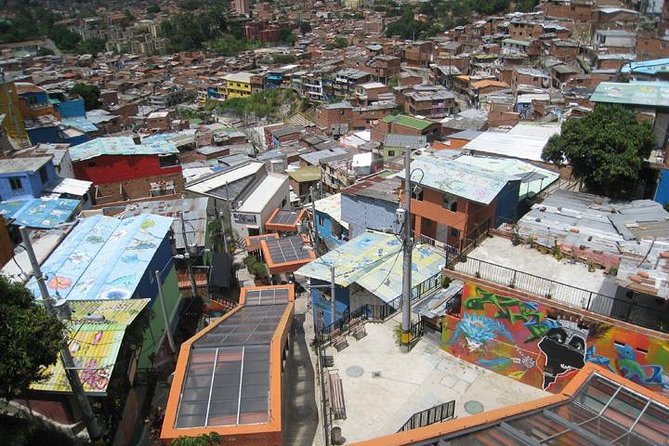
You may ride the famous outdoor escalators, view murals, and learn how improved access changed daily life in a steep hillside community. One account describes taking the escalators all the way up, with views into homes, private routines, and artwork along the route.
The escalators are not just a tourist attraction. They are part of the public transport system for residents. That practical purpose gives the visit more meaning than a quick stop for photographs. You can see how infrastructure affects access, movement, and opportunity in a neighborhood built on difficult slopes.
Some accounts also describe a cable car ride, similar to a ski lift, as part of the wider Medellín experience. Since the exact route can vary, confirm this before booking if the cable car is essential to you. Do not assume every departure includes every element described in past experiences.
Comuna 13 is also where a local guide may join the tour. This can be a real advantage. A resident guide can explain the neighborhood’s former dangers, the changes brought by public projects, and the role of art, music, and local pride.
But this portion is not guaranteed to be equally strong every time. One poor experience involved a local guide who offered little explanation, checked a phone often, and focused more on commercial stops than on the neighborhood’s story. That is a useful warning: the setting is compelling, but the guiding still matters.
You may encounter places selling hats, food, shirts, and artwork. Those stops can support local businesses, but they may also feel like interruptions if you want history rather than shopping. You are not required to buy anything, and you can ask your guide how much time will be spent at shops.
Why guide quality changes the whole experience
This tour depends on storytelling. The buildings and public spaces alone cannot provide a full account of Medellín’s past. You need a guide who can explain dates, causes, consequences, and differing interpretations in a clear order.
Juan Carlos has been praised for making the experience feel personal and engaging. Hector has also been described as enthusiastic, proud of Medellín, and especially effective when explaining the city and Comuna 13.
There is also a clear warning in the feedback. One guide, Nicolas Zapata, was criticized for weak English, scattered narration, and short answers to important questions. The problem was not a lack of speaking time. It was the lack of useful structure and detail.
That is why I would contact the operator before the tour and state your language needs clearly. The experience includes a bilingual guide, but bilingual does not always mean equally strong in both languages. If you speak Spanish, you may have an easier time getting detailed answers. If you do not, ask for a guide who is comfortable discussing history in English.
A good guide should explain that television is not a complete historical record. The tour operator specifically notes that the popular series is fiction, so you should expect corrections and added context rather than a scene-by-scene recreation.
Ask for a chronological explanation. Start with the rise of the cartel, then the effect on Medellín, the conflict, the turning point, and the city’s later changes. That simple structure can prevent the scattered feeling that ruined one reported experience.
Is $78 per person good value?
The price is $78 per person. For four hours, a private guide, private transportation, bilingual service, and medical assistance, I consider that a fair price if your group values comfort and personal attention.
Private transportation matters in Medellín because the itinerary covers separate parts of the city. You are not left working out several connections while trying to fit cemetery visits, memorials, and Comuna 13 into one half-day. You can also ask to pause for clarification or adjust the conversation to your interests.
The price is less attractive if the guide provides only brief facts at each stop. You can see a cemetery and public park without paying for a private tour. What you are really buying is interpretation, transport, and a coherent account of the city.
Food and drinks are not included, and personal expenses are extra. The tour lasts about four hours, so you should eat beforehand or budget for a purchase during the day. If Comuna 13 includes time at food or craft stalls, treat those as optional spending rather than part of the tour price.
Groups of friends or families may get the best value. The cost is per person, but the private arrangement means your group controls the questions and pace. Solo visitors should think harder about the price, since the same fee is not shared across a larger party.
Timing, comfort, and practical planning
You can choose a morning or afternoon departure. I would choose based on your wider Medellín plans, not on an assumed difference in content. The information provided does not promise a separate morning or afternoon itinerary.
Wear comfortable shoes. The Comuna 13 portion may involve escalators, walking, and uneven movement around a hillside neighborhood. The named cemetery and memorial stops are shorter, but the day still works best when you are ready to walk and stand.
Private transportation is included, along with medical assistance. Confirmation arrives at booking, and the tour is near public transportation. Most people can participate, though the supplied details do not provide a specific accessibility assessment for every stop.
The tour is private, so only your group participates. That gives you a better chance to ask sensitive questions without an audience. It also means the guide’s performance has a larger effect on your experience, since there is no larger group adding questions or filling in missing context.
Free cancellation is available if you cancel at least 24 hours before the local start time. Cancellations or changes made inside that window are not accepted for a refund.
Who should choose this experience?
I would recommend it to you if you want a guided introduction to Medellín’s recent past and prefer private transport. It suits visitors who have seen the city’s cartel story in television drama but want a broader, more grounded explanation.
It is also a good fit for families with older teenagers or college-age children who already have an interest in the subject. The private format makes it easier to ask difficult questions and adjust the level of detail.
I would be more cautious if your main goal is to visit intact cartel buildings or a famous rural estate. Those places are not part of this four-hour route. One well-known ranch is several hours outside Medellín, and other key sites have been rebuilt or removed.
I would also hesitate if you dislike tours that include shopping opportunities. Comuna 13 can involve local stalls and small businesses, and some people find those stops useful while others find them distracting.
My verdict on this Medellín history tour
Book it if you want context, private transport, and a possible Comuna 13 visit more than a collection of preserved crime sites. The best guides, especially Juan Carlos and Hector, appear to make the city’s difficult past understandable while showing genuine pride in Medellín today.
Before paying, confirm three things: which stops are included on your departure, whether Comuna 13 and the cable car are part of the route, and who will guide your group in your preferred language. Those questions address the tour’s biggest uncertainties.
I would not book it expecting constant drama or a museum-quality display. I would book it as a compact city-history tour whose success depends on clear narration. With the right guide, the most valuable sight may not be a former hideout at all. It may be the contrast between a troubled past and a community working to define its own future.
FAQ
How long does the tour last?
The tour lasts approximately four hours.
How much does the tour cost?
The listed price is $78 per person.
Is the tour private?
Yes. Only your group participates in the private tour or activity.
Is transportation included?
Yes. Private transportation is included, along with a bilingual guide and medical assistance.
Can I choose a morning or afternoon departure?
Yes. The tour offers a choice between morning and afternoon departures.
What is the cancellation policy?
You can cancel at least 24 hours before the local start time for a full refund. Cancellations or changes made less than 24 hours before the start time are not accepted for a refund.
Just added in Medellin
- Walking Tour, Cable Car & Fruit Tasting★ 5.0 · 1 review
- Pablo Escobar and Griselda Blanco Tour★ 5.0 · 1 review
- City tour, Commune 13, Metro Cable, Botero Park and more. Private★ 5.0 · 34 reviews
- comuna 13 tour★ 3.5 · 6 reviews
- 3 days private mountain tour, nature and culture near Medellin★ 5.0 · 22 reviews
- commune thirteen transformation story★ 4.5 · 14 reviews
- fruits tour★ 5.0 · 2 reviews
- Paragliding and hammocks zipline over waterfalls private tour★ 5.0 · 6 reviews
Medellín Tours, compared.

Comuna 13 Graffiti Tour, Cable Car & Street Food
Read our review →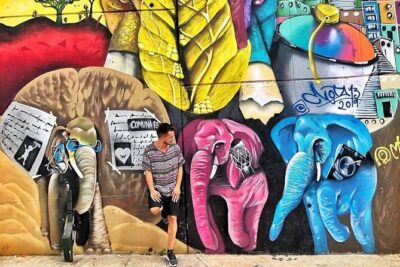

Guatapé Tour: Piedra del Peñol with Boat Tour, Breakfast, Lunch
Read our review →
Day Trip To Guatapé with ,Breakfast, Lunch and Boat Ride
Read our review →
Comuna 13 Graffitour knows the urban art district of Medellín
Read our review →
Tour to Guatape, Piedra del Peñol, lunch, snacks boat trip
Read our review →
Half Day Bike Tour in Medellin – Local snack, Coffee or Beer
Read our review →