
REVIEW · COMUNA 13 TOURS
Comuna 13 & Downtown Medellin: From violence to innovation
Medellín changes before your eyes. This four-hour outing links downtown art and daily life with the murals, escalators, and social story of Comuna 13. I like the way it uses the city’s own transport, rather than keeping you inside a tour bus, and I like that the price includes metro, cable car, bus or taxi rides, drinks, and several local snacks.
The small group, limited to nine people, should make it easier to ask questions. The main drawback is physical: you will walk, use public transport, climb or ride outdoor escalators, and deal with hills and stairs. This is not a good choice for wheelchair users or anyone with major mobility limits.
In This Review
- Key points at a glance
- Why this Medellín tour works so well
- Starting at Parque Berrío and meeting downtown
- Botero sculptures and the character of downtown
- Metro ride: seeing the city through public transport
- Cable car views and the hillside neighborhoods
- Street food between the rides
- Arriving in Comuna 13 by bus
- Comuna 13, the outdoor escalators, and the murals
- What the four-hour schedule feels like
- Is $31 a fair price?
- Who should book this experience?
- Should you book the Comuna 13 and Downtown Medellín tour?
- FAQ
- How long does the tour last?
- How much does the tour cost?
- Where does the tour start?
- Where does the tour finish?
- What language is the tour conducted in?
- Are public transportation tickets included?
- Is food included?
- Is alcohol included?
- Is the tour suitable for wheelchair users?
- How large is the group?
- Can I cancel for a refund?
Key points at a glance
- A city-to-hills journey: You begin at Parque Berrío and travel outward by metro and cable car, watching Medellín change as you go.
- Botero in the open air: Downtown includes the world’s largest outdoor collection of Fernando Botero sculptures.
- Transport is part of the lesson: Metro, Metrocable, and bus rides show how public infrastructure connects different parts of the city.
- Street food is included: You receive arepas, empanadas, pastries, fruit popsicles, and nonalcoholic drinks.
- Comuna 13 has more than murals: The tour explains violence, investment, community action, and the district’s long process of change.
- Small-group attention: With no more than nine participants, you should have room for questions and a guide who can keep the group together.
Why this Medellín tour works so well
Many city tours treat downtown and Comuna 13 as separate photo stops. This one connects them through a single route. You start in the center, where about 1.2 million people move through the downtown area each day, then ride outward toward hillside neighborhoods where transport has played a major part in city life.
That route gives the tour its purpose. You are not simply shown a colorful wall and told that Comuna 13 changed. You see how the city’s public systems, social programs, and community efforts fit into a larger story.
I especially like the decision to make transportation part of the experience. A metro ride can tell you more about everyday Medellín than a coach window does. The cable car adds a second layer, carrying you over houses and up toward one of the city’s higher mountain areas.
At $31 per person, the value is strong if you want more than a quick visit to Comuna 13. The price covers all public transport used during the outing, water, soda, juices, and several snacks. You are also paying for a live English-speaking guide and a small group, not just a transfer and a walk through the murals.
More Comuna 13 tours:
- Medellin: Comuna 13 Graffiti Tour, Cable Car & Street Food
★ 4.8 · 9,046 reviews - Comuna 13 Graffiti Tour with Street Food
★ 5.0 · 7,503 reviews - Comuna 13 Graffitour knows the urban art district of Medellín
★ 5.0 · 2,856 reviews
Starting at Parque Berrío and meeting downtown
The meeting point is Parque Berrío, the main square in front of the white Iglesia de la Candelaria. Guides wear beige shirts marked Colombian Ambassadors, so the location should be fairly easy to identify once you reach the square.
Give yourself extra time to get there. From Monday through Saturday, the recommendation is 40 to 50 minutes because traffic around downtown can be slow and an Uber may take time to arrive. On Sundays and holidays, 30 minutes is advised.
Parque Berrío is a useful starting point because it places you directly in the middle of Medellín’s public life. You are not beginning in a quiet hotel district or at an attraction built for sightseeing. You begin in a working city square, with the church, transport links, pedestrians, and the movement of downtown all around you.
That setting prepares you for the first hour. The downtown portion covers history, culture, art, important buildings, parks, and squares. It is a broad introduction rather than a single museum visit, so you should expect a walking explanation of the center rather than a long indoor stop.
Botero sculptures and the character of downtown
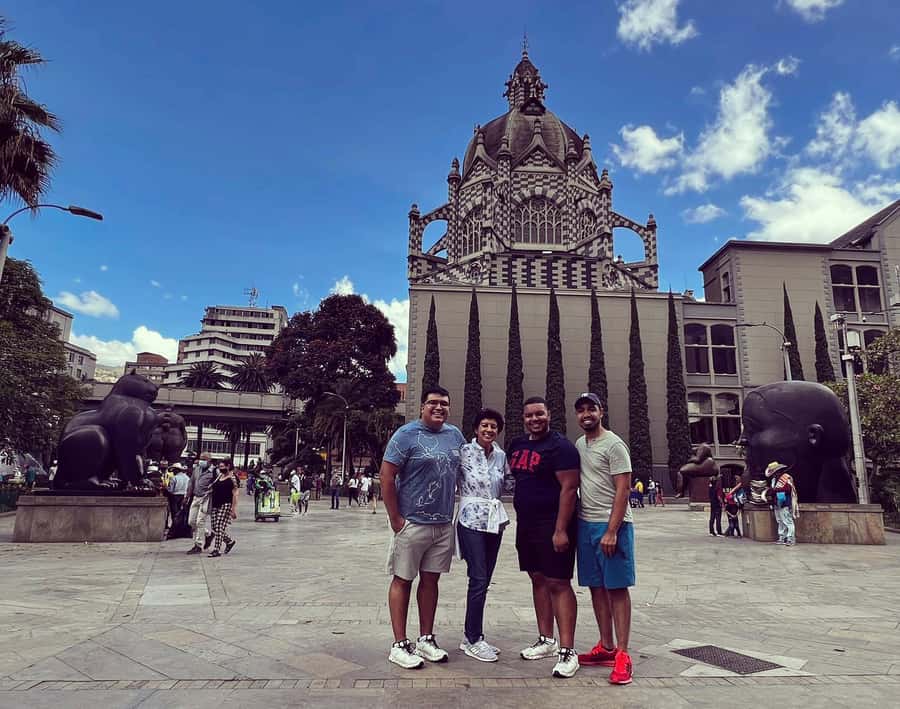
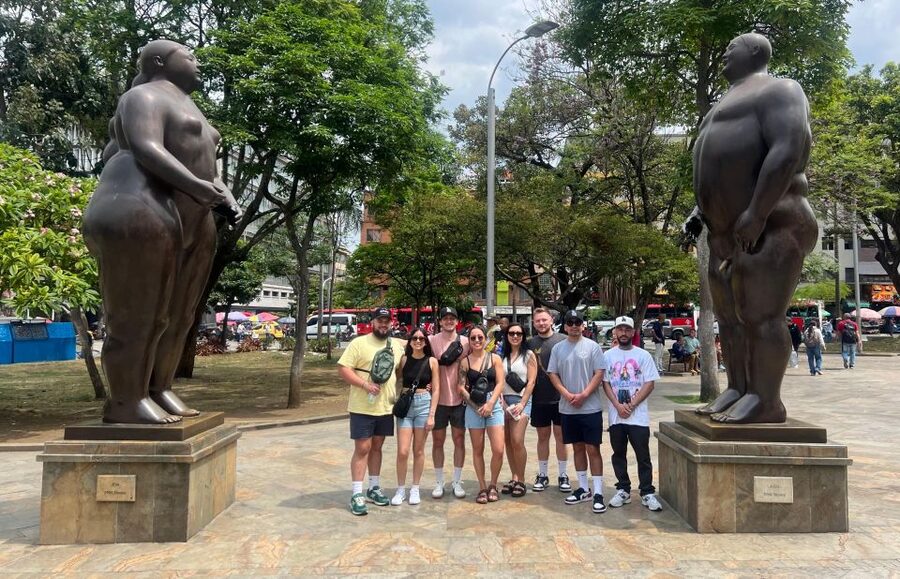
One of the main artistic highlights is the open-air collection of Fernando Botero sculptures. Medellín is Botero’s birthplace, and his large, rounded figures are among the city’s most recognizable public artworks.
Seeing them outdoors matters. The sculptures are part of the public space, surrounded by ordinary city activity rather than displayed in a silent gallery. You can consider the artwork while watching people go about their day, which helps connect Medellín’s art scene to its streets.
The downtown section also gives you context for the city’s transformation. The guide explains what daily life looks like in an area that handles enormous numbers of people each day. That helps prevent Comuna 13 from becoming a detached story about murals and tourist photographs.
You may find the downtown section less visually polished than the hillside portion. That is part of its value, but it also means you should come ready for a real urban environment rather than a carefully arranged sightseeing zone.
Metro ride: seeing the city through public transport
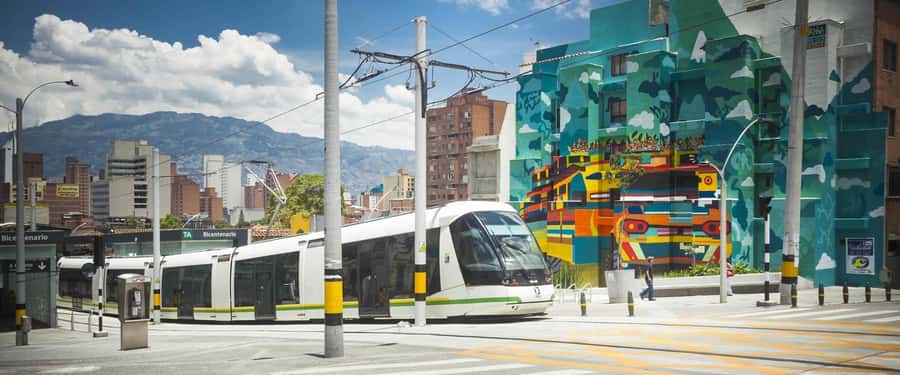
After exploring downtown, you take the metro for about 20 minutes. The metro is not just a practical way to get around. It lets you share space with people using Medellín as their normal transport system.
For you, this means the tour has a more grounded feel. You are moving through the city as residents do, following the route rather than being carried from one attraction to the next. The guide can also explain how the transport network fits into Medellín’s wider social changes.
The metro portion may feel quick, especially if your main interest is Comuna 13. One visitor who expected to care mostly about Comuna 13 found that the downtown-to-outskirts route gave a new understanding of Medellín. That is a useful way to judge this outing: it is not only a Comuna 13 tour with a short introduction attached.
All transport tickets used during the tour are included. The listed options include Metro, Metrocable, Tram, bus, or taxi, although the exact combination can depend on the route and conditions on the day.
More things to do in Medellin:
- Museo Pablo Escobar
★ 5.0 · 7,242 reviews - Guatapé Tour: Piedra del Peñol with Boat Tour, Breakfast, Lunch
★ 5.0 · 7,035 reviews - Medellín: The Real Pablo Escobar Tour
★ 4.8 · 3,205 reviews - Day Trip To Guatapé with ,Breakfast, Lunch and Boat Ride
★ 5.0 · 2,996 reviews
Cable car views and the hillside neighborhoods
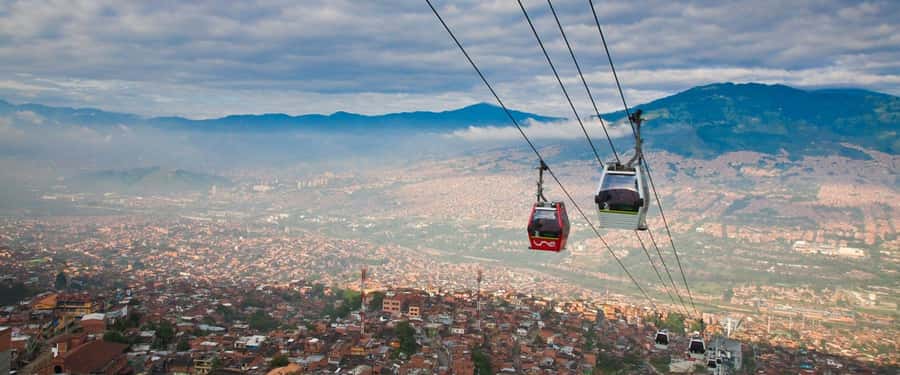
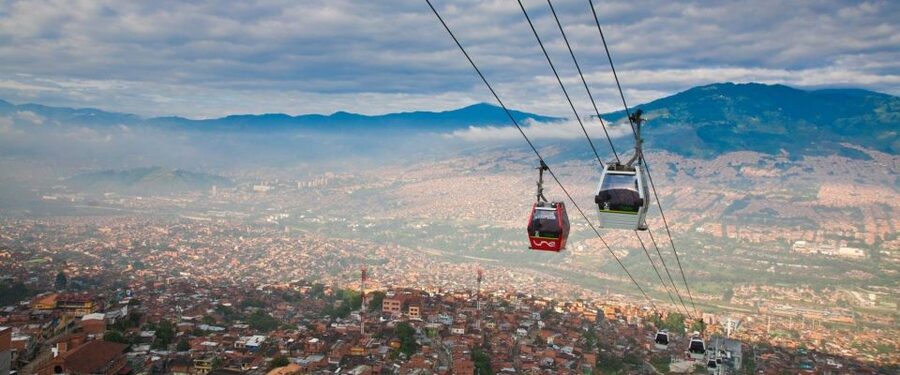
The cable car ride lasts about 40 minutes and is one of the strongest parts of the experience. You travel above houses toward one of Medellín’s higher mountain areas, gaining a broad view of the city and the steep neighborhoods around it.
From the cabin, you can better understand the challenge of building and moving through hillside communities. Streets and homes climb the slopes, and the physical distance between central Medellín and the upper neighborhoods becomes clear.
The view is attractive, but the guide’s explanation gives it weight. You learn why reaching higher neighborhoods has been difficult and why transport connections matter so much. The ride turns infrastructure into something you can see, not just a policy topic.
You should also expect a slower pace during this part. Cable cars can move steadily, but the 40-minute duration means the tour spends real time on the journey. That is good for people who want city context and views. It may feel long if you only want to reach the escalators as fast as possible.
Bring sunscreen and comfortable shoes. The tour information also recommends carrying water, though drinks are supplied during the outing. A camera is worth bringing for the views and murals, but keep your attention on the guide and the changing city below.
Street food between the rides
A 20-minute street-food stop breaks up the transport sections. Included snacks can include arepas, empanadas, pastries, and fruit popsicles, along with water, soda, or juices.
This is a modest tasting rather than a full food tour. You should not book it expecting a long restaurant meal or a detailed cooking class. The benefit is that you get several familiar Colombian street foods without paying extra at each stop.
I like this inclusion because it keeps the tour connected to ordinary eating habits. An arepa or empanada gives you a quick taste of local life, and the short stop fits the tour’s moving, practical character.
Alcohol and cocktails are not included. If you want those, you will need to buy them separately, though alcohol is not central to this experience.
Arriving in Comuna 13 by bus
After the food stop, the group uses a bus or coach for about 20 minutes before reaching Comuna 13. This leg continues the tour’s main idea: you move from the city center toward the outer neighborhoods using public systems rather than jumping straight into a private vehicle.
The change in setting makes the route useful. Downtown can feel dense and commercial, while the hillside area has a different rhythm and built form. The guide helps connect those differences to the city’s past and to the practical problems faced by residents in higher districts.
The bus ride may be the least memorable part from a sightseeing point of view. Still, it supports the overall story and gives you a break before the one-hour guided walk through Comuna 13.
Comuna 13, the outdoor escalators, and the murals
The final hour focuses on Comuna 13, finishing at Parque de la Paz. The district was once known as one of Medellín’s most dangerous areas. The tour explains the violence and the later transformation without allowing the story to shrink into a simple Escobar-centered narrative.
That balance matters. Comuna 13 has painful history, but it is also a living neighborhood shaped by residents, artists, investment, and new infrastructure. You learn how local people became part of the solution and how the area moved through a long process that required years of social and physical investment.
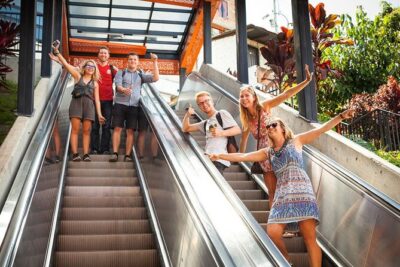
The famous outdoor escalators are the visual center of this section. They provide an unusual solution to steep streets and long climbs, while also giving you a clear example of how infrastructure can affect daily life. The escalators are not merely a clever attraction. They are tied to access, movement, and the connection between hillside residents and the rest of Medellín.
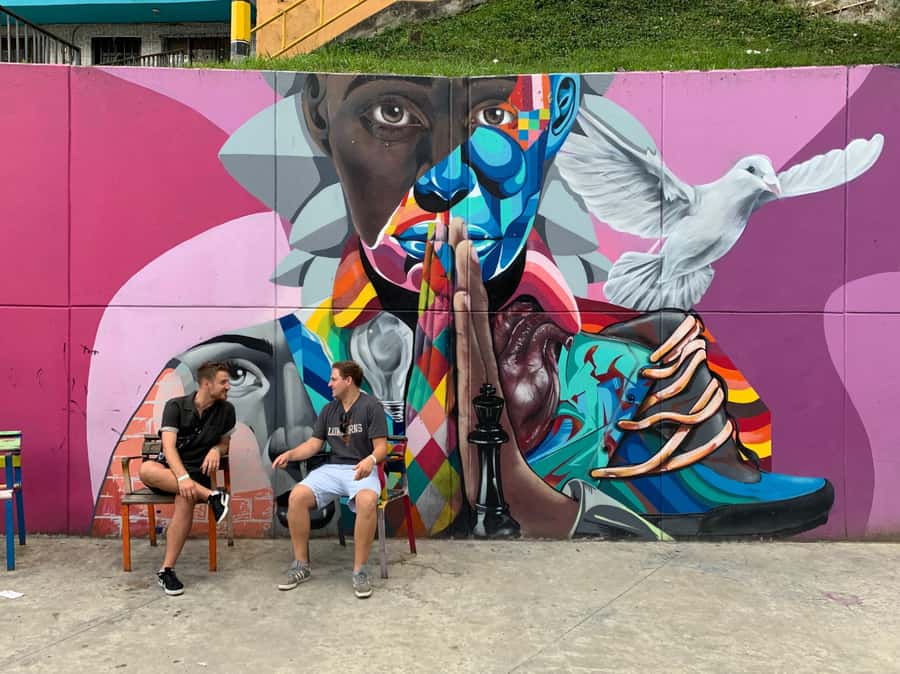
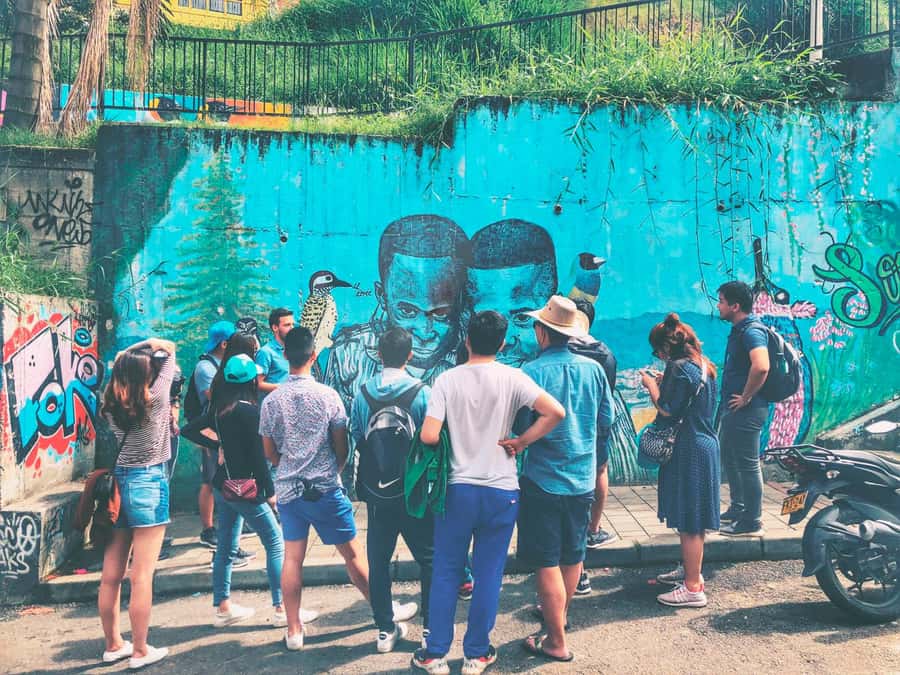
Around the escalators, the walk follows streets filled with murals and strong colors. The art is a major draw, but the guide’s job is to explain the ideas and events behind it. You should have time to take photographs, though the walk is still a guided visit rather than a free afternoon to explore every side street.
The area can be crowded and busy, especially around popular viewpoints and mural walls. Stay with the group, follow the guide’s instructions, and keep your belongings secure in the same sensible way you would in any crowded urban area.
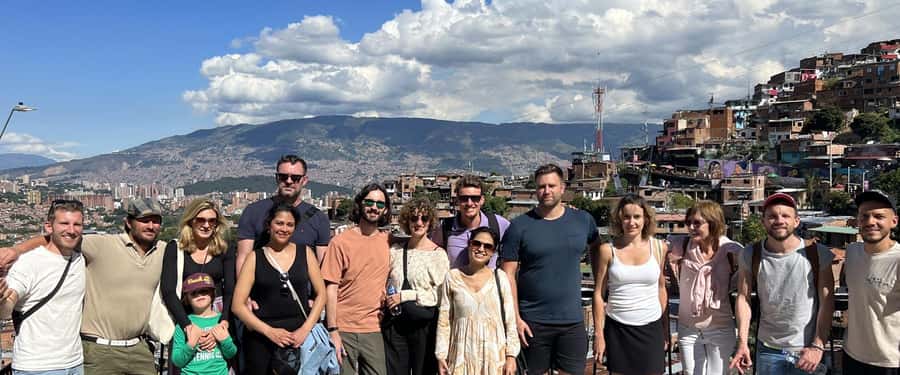
One particularly useful detail from the tour feedback is that the English guide kept the group together and welcomed questions. The small size, sometimes as few as five people, makes this easier. The exact guide can vary, but the available experience points to clear English and a friendly, attentive approach.
What the four-hour schedule feels like
The timing is active but manageable for people who are comfortable walking and using city transport. The rough structure is:
- One hour in downtown Medellín
- About 20 minutes on the metro
- About 40 minutes on the cable car
- About 20 minutes for street food
- About 20 minutes by bus or coach
- One hour in Comuna 13
These times add up to roughly four hours, though real city travel can shift the schedule. Boarding, transfers, crowds, and traffic may affect the pace.
You should wear shoes that handle walking and uneven urban surfaces. The outing is not suitable for wheelchair users or people with mobility impairments, and anyone who struggles with steep routes should think carefully before booking.
The group limit of nine is a real advantage. A large group can make metro boarding and narrow streets awkward. Here, you have a better chance of hearing the guide, asking follow-up questions, and staying connected during transfers.
Is $31 a fair price?
Yes, for the package described. You receive four hours of guiding, all transport tickets, drinks, and several snacks. Buying those items separately would take more planning, and you would lose the guide’s explanation linking downtown, transport, and Comuna 13.
The price is especially fair if you are new to Medellín and want an introduction to how the city works. You are getting art, public spaces, transportation, food, views, and a major neighborhood story in one half-day.
The value is lower if you want a slow, art-heavy visit or a long food experience. The schedule moves through several parts of the city, so each element gets a set amount of time. This tour favors variety and context over lingering at one place.
Free cancellation up to 24 hours before the start and the option to reserve now and pay later make it easier to fit into a changing itinerary. Check the available start times before booking, since the tour lasts four hours and the schedule can affect the rest of your day.
Who should book this experience?
I would choose this tour if you want to understand Medellín through its streets and transport system, not just collect photographs. It suits first-time visitors, urban history fans, people interested in public infrastructure, and anyone who wants a guided introduction to Comuna 13 with social context.
It also suits visitors who prefer small groups. You can ask direct questions about the city’s transformation, the cable cars, the escalators, and everyday life without trying to speak over a large crowd.
You may want a different experience if you have limited mobility, dislike public transport, or want to spend most of the day in Comuna 13. The downtown portion is important to the tour’s design, so skipping it would mean missing the route’s main point.
Should you book the Comuna 13 and Downtown Medellín tour?
Book it if you want the city’s story told as a connected journey. The best feature is not any single stop. It is the movement from Parque Berrío through downtown, onto the metro and cable car, past hillside homes, and finally into the murals and escalators of Comuna 13.
The tour earns its $31 price through included transport, food, a small group, and useful explanation. Allow extra time to reach Parque Berrío, wear proper shoes, and expect a busy four hours rather than a relaxed stroll.
If you want a thoughtful first look at Medellín’s art, public transport, food, and social change, this is a strong choice.
FAQ
How long does the tour last?
The tour lasts four hours.
How much does the tour cost?
The listed price is $31 per person.
Where does the tour start?
It starts at Parque Berrío, in the main square in front of Iglesia de la Candelaria, a white church.
Where does the tour finish?
The tour finishes at Parque de la Paz in Comuna 13.
What language is the tour conducted in?
The live tour guide speaks English.
Are public transportation tickets included?
Yes. Metro, Metrocable, tram, bus, or taxi tickets used during the tour are included.
Is food included?
Yes. Included snacks can include arepas, empanadas, pastries, and fruit popsicles. Water, soda, and juices are also included.
Is alcohol included?
No. Alcohol and cocktails are not included.
Is the tour suitable for wheelchair users?
No. The experience is not suitable for wheelchair users or people with mobility impairments. Comfortable shoes, sunscreen, a camera, and water are recommended.
How large is the group?
The group is limited to nine participants.
Can I cancel for a refund?
Yes. You can cancel up to 24 hours in advance for a full refund. You can also reserve now and pay later.
Just added in Medellin
- Tour Peñol-Guatape privado: con desayuno, almuerzo y bote★ 5.0 · 1 review
- Silletero Tour – From Medellín★ 5.0 · 1 review
- Tour Medellín: Commune13 and Pablo Escobar + Rooftop★ 5.0 · 2 reviews
- Tour Medellín: Pablo Escobar and Commune 13★ 5.0 · 3 reviews
- Medellin: Tour Pablo Escobar Privado Con Guia Local★ 5.0 · 1 review
- Tour Guatapé – Piedra del Peñol with departure from Medellín★ 5.0 · 24 reviews
- Tour Guatapé: luxury yacht to the stone of Peñol.★ 5.0 · 2 reviews
- Tour Guatapé con visita a Granja de las Llamas y las Alpacas★ 3.5 · 11 reviews
Comuna 13 Tours, compared.
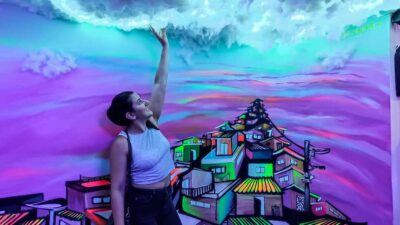
Comuna 13 Graffiti Tour, Cable Car & Street Food
Read our review →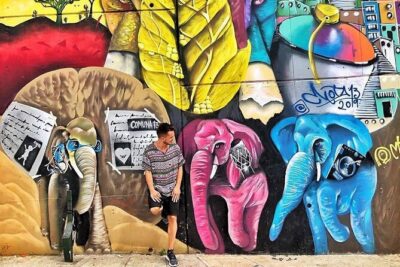
Comuna 13 Graffitour knows the urban art district of Medellín
Read our review →
City tour Medellin + Comuna 13 + Graffititour Paisa for a day
Read our review →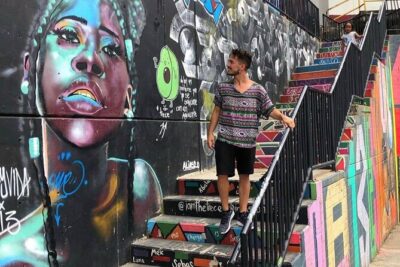
Guided Tour of Comuna 13 Medellín with Snacks Included
Read our review →
Comuna 13: Esmeralda más cata de café y cerveza tour Inolvidable
Read our review →Browse the lists this tour appears in