
REVIEW · HIKING & TREKKING
Bogota: East Hills Mountain Hike
Bogotá’s best view may require muddy shoes. This four-hour hike into the East Hills trades city streets for forest, páramo plants, and a broad look over the capital from Moyas. I like the rare chance to see Bogotá’s wilderness with an English-speaking guide, and I like that the small group is limited to eight people. The main catch is the altitude and steep ground, especially after rain.
You’ll climb from Bogotá’s high savannah toward roughly 3,100 meters above sea level, gaining about 550 meters over 3 kilometers each way. I’d plan this for at least 36 hours after arriving, and I’d bring shoes with strong grip that can get dirty. The route has no shops or toilets inside the reserve, so water and snacks belong in your day pack.
In This Review
- Key points to know before you hike
- Why Bogotá’s East Hills are worth your morning
- The early pickup and the first climb
- Páramo plants, forest reserve, and city pressure
- Reaching Moyas at about 3,100 meters
- The return walk and the G Zone finish
- Is $80 a fair price?
- What to pack for a safe, comfortable climb
- Guides, group size, and the feel of the outing
- Who should book this East Hills hike?
- Should you book the Bogotá East Hills Mountain Hike?
- FAQ
- How long is the Bogotá East Hills hike?
- How high does the hike go?
- How difficult is the hike?
- How long should I wait after arriving in Bogotá?
- What languages does the guide speak?
- What does the $80 price include?
- Can I cancel the tour?
Key points to know before you hike
- Moyas delivers the payoff: Stone formations near the top give you wide views across Bogotá and the forest reserve to the east.
- The climb is short but serious: The route covers about 6 kilometers round trip with a 550-meter ascent, making it medium-high in physical demand.
- Altitude shapes the day: Bogotá sits at about 2,600 meters, and the trail rises another 500 meters or so.
- Rain can change the route: Mud and slippery slopes were a real problem during one wet outing, so use hiking shoes with deep tread.
- Your guide adds the meaning: Expect discussion of native and invasive species, páramo vegetation, and environmental pressure around the city.
- The finish is convenient: After the hike, you can walk with your guide toward Bogotá’s G Zone for food, coffee, or onward transport.
Why Bogotá’s East Hills are worth your morning
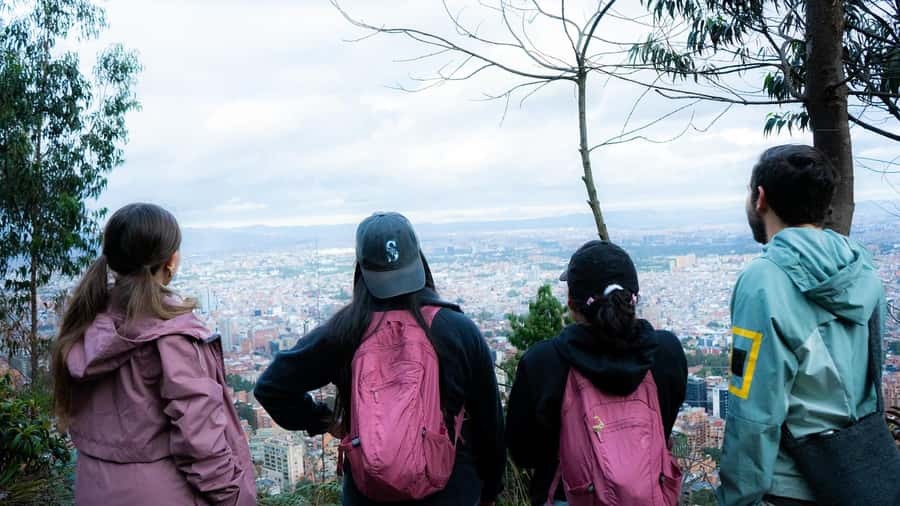
Bogotá spreads across a broad high plain, with the eastern Andes forming a dramatic wall along the city’s edge. The Cerros Orientales, or East Hills, are always visible from the capital, yet much of this rugged area remains unfamiliar to people who spend their time downtown.
That contrast is what makes the hike worthwhile. You are not being taken to a distant national park. You are walking from the city’s edge into a protected forest reserve, where the trees and high-altitude plants help explain Bogotá’s weather, water supply, and cooler mountain climate.
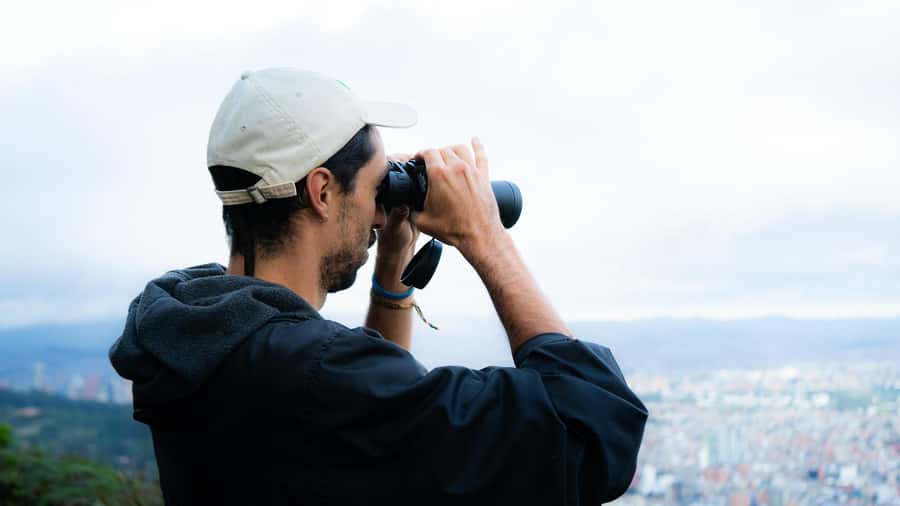
I like this setting because it gives you more than another lookout. From Moyas, you see the capital below and the forest stretching away to the east. The view helps you understand Bogotá’s shape, while the trail shows how quickly urban life gives way to Andean vegetation.
The reserve is also tied to local civic effort. Residents of nearby neighborhoods have helped push for trails that connect parts of the hills and make this natural area more accessible. That gives the walk a local purpose. You are not simply consuming a scenic view. You are using a public route shaped, in part, by people who wanted Bogotá residents to know and protect the hills.
More Hiking Tours in Bogota
- Colombia’s Tallest Waterfalls: La Chorrera Hike
★ 5.0 · 287 reviews - La Chorrera and Chiflon Waterfalls Private Hike Tour
★ 5.0 · 125 reviews - Las Moyas Morning Hike: Bogotá’s Best Skyline View + Local Guide
★ 5.0 · 87 reviews
The early pickup and the first climb
The tour includes hotel pickup in a private vehicle, followed by the hike from a meeting point on the city’s outskirts. Exact starting times depend on availability, but an early start is a smart choice. One outing began with a hotel pickup at about 6 a.m. on a Saturday, which helped avoid the heavier foot traffic that can arrive later in the morning.
The early hour also works well for Bogotá’s weather. Mountain conditions can shift, and beginning before the day warms fully gives you a cooler start. You should still carry a raincoat because wet conditions can make the trail much harder.
Once you leave the vehicle, expect a steady uphill route rather than a gentle nature stroll. The full walk is about 3 kilometers in each direction, with an elevation gain of roughly 550 meters. That is a substantial climb over a short distance. You will feel it in your legs, and at this altitude you may need more pauses than you would on a similar route at sea level.
Your guide should set the pace for the group and explain what you are seeing along the way. The tour is available in English or Spanish, and the small-group limit of eight makes it easier to ask questions or take a short break without holding up a large crowd.
Páramo plants, forest reserve, and city pressure
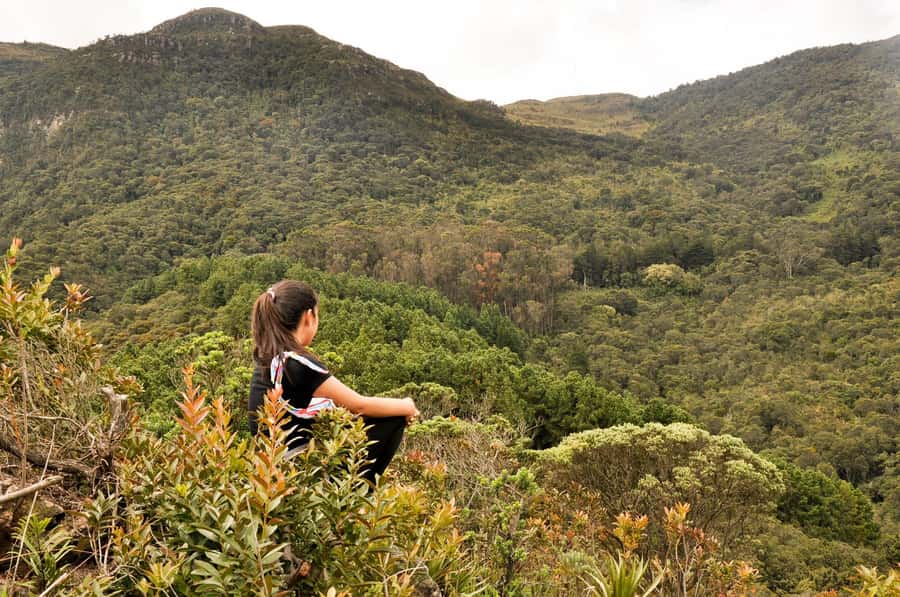
The East Hills are not just a green backdrop for photographs. They contain vegetation associated with the páramo, the high Andean zone known for plants adapted to cold, wet conditions. At around 3,100 meters, you are high enough to notice a clear change from ordinary city vegetation.
The guide discusses the competition between native and invasive species. That subject matters because protected areas near large cities face constant pressure. Introduced plants can spread, crowd out native growth, and alter the balance of an area that supports local ecosystems.
You will also hear about environmental problems affecting Bogotá. The value here is the connection between a small trail and a much larger issue: a city depends on the natural areas at its edge, even when many residents rarely enter them.
I would not choose this tour only for botany. The route is too short for that, and the main attraction remains the combination of forest, high-altitude plants, and city views. Still, the guide’s explanation can turn a pleasant uphill walk into a more useful experience. Instead of seeing anonymous greenery, you begin to recognize the tension between conservation and urban growth.
Reaching Moyas at about 3,100 meters
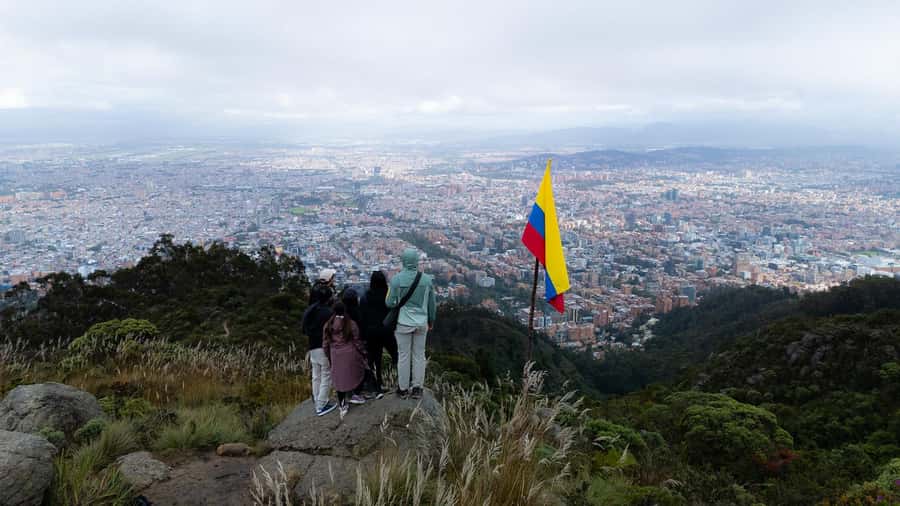
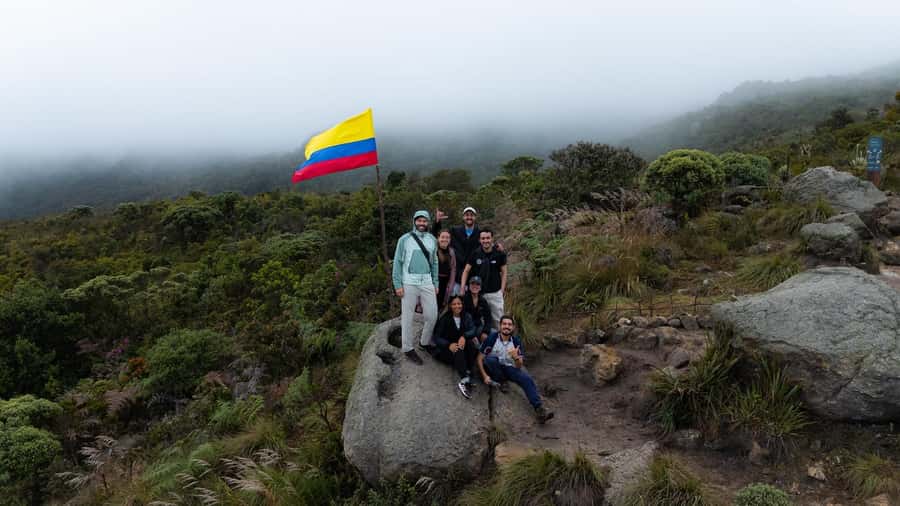
Moyas is the destination and the visual reward. The name refers to a group of stone formations where you can stop and look over Bogotá. From this higher point, the capital stretches across the savannah, while the protected forest continues east toward the mountains.
The view can feel more open than the famous lookout at Monserrate because you are looking from within the East Hills rather than simply approaching a built viewpoint. The route is also less common on a standard city visit, which gives the morning a more local and outdoors-focused character.
You should allow time at Moyas to catch your breath, take photographs, and listen to the guide. At this height, the stop is not only about the panorama. It is also where the climb’s effect becomes clear. You have gained about 550 meters from the starting level, and the shift from Bogotá’s streets to mountain vegetation is visible below and around you.
The drawback is that the view depends on conditions. Rain, cloud, or mist can reduce the panorama, and wet weather can make the final approach slick. One outing encountered steep, muddy, slippery ground after rain. Bring footwear with excellent tread, and choose shoes that you do not mind covering in dirt.
A completely different kind of day:
- Bogotá Bike Tour
★ 5.0 · 3,329 reviews - Bogota: Bicycle City Tour
★ 4.9 · 2,156 reviews - Zipaquirá: Salt Cathedral Group Tour with Pickup
★ 4.8 · 1,606 reviews - La Candelaria, Monserrate and Museums Bogotá Private City Tour
★ 5.0 · 1,567 reviews
The return walk and the G Zone finish
After time at Moyas, you return by foot along the same general route. Downhill walking can sound easy, but muddy slopes can be awkward, and tired legs make slips more likely. Keep your raincoat and water accessible rather than burying them at the bottom of your pack.
The tour then continues on foot toward Bogotá’s G Zone, a dining and café area. This is a practical ending rather than a second major attraction. You can stop for food or coffee, or arrange transport to your hotel or next destination.
Because food and drinks are not included, you should budget separately for this part. The guide can accompany you toward the area, but you are responsible for personal expenses. If you prefer to return directly to your hotel, the tour description allows for arranging onward transport.
I like this finish because you do not have to solve the post-hike logistics alone at the trailhead. You end in a part of the city where you can recover, eat, and continue your day. The tradeoff is that the four-hour duration does not include a meal, so the schedule may run longer if you choose to sit down afterward.
Is $80 a fair price?
At $80 per person, this is not the cheapest way to see Bogotá from above. You are paying for a private vehicle transfer, an English or Spanish-speaking guide, access to the forest reserve, and a small group capped at eight people.
The value improves if you care about context and convenience. A self-guided walk may cost less, but you would need to manage transport, route finding, reserve access, altitude concerns, and the environmental details on your own. The guide also makes the experience easier for anyone who wants to ask questions about Bogotá’s hills rather than simply reach a viewpoint.
The price is less convincing if you want a relaxed half-day outing with little physical effort. This is a fairly demanding climb, and the reserve has no amenities. You are paying for access to a natural area and a guided experience, not for comfort along the route.
Foreign visitors should note that the paid amount does not include Colombian VAT. The VAT benefit applies to foreigners entering as tourists, and you must provide a copy of your passport and the page or image showing your entry stamp as proof. Handle this requirement before the tour if the provider requests it, so the tax treatment is clear.
What to pack for a safe, comfortable climb
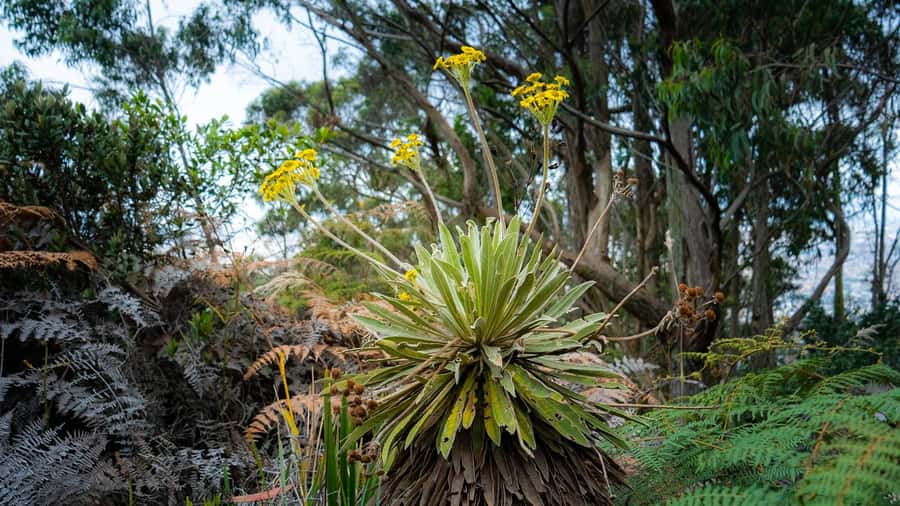
Your preparation will shape the experience more than any other factor. The trail is short in distance, but the steep ascent, high altitude, and changing weather make it more demanding than the numbers first suggest.
Bring:
- Hiking shoes or comfortable shoes with strong traction
- A raincoat or waterproof outer layer
- A warm jacket
- Drinking water
- Snacks
- Sunscreen
- Sunglasses
- Comfortable hiking clothes
- Passport or identification card
Do not rely on finding food or drinks inside the reserve. There are no amenities along the route, so carry enough water and a snack for the full walk.
Altitude deserves special attention. Bogotá itself sits at about 2,600 meters, and the trail rises to around 3,100 meters. Give yourself at least 36 hours in the city before hiking, with two days after arrival being the safer suggestion if you are not used to high places.
This is not an appropriate choice for anyone with mobility impairments. You should also think carefully about your fitness if steep uphill walking is difficult. The tour calls the physical demand medium-high, and that description is more useful than the four-hour duration alone.
Guides, group size, and the feel of the outing
The guide is central to the tour. A capable guide can pace the ascent, explain the plants and conservation problems, and help you understand why these hills matter to Bogotá. The language options are English and Spanish.
One guide named in a past outing was Rodrigo Guia, who speaks English, French, and Spanish and was described as friendly, communicative, and outgoing. Another guide, Felipe from Destino Bogota, was praised for his company and strong subject knowledge. Guide assignments can change, so you should not assume either person will lead your departure, but these details show the sort of personal guidance the experience aims to provide.
With no more than eight participants, the group should feel more flexible than a large bus tour. You can ask about native plants, invasive species, or the city below without shouting across a crowd. A small group also helps when the trail becomes narrow or muddy.
Still, small group does not mean private attention at every moment. The pace must suit several people, and a fitter hiker may need to slow down while someone less accustomed to altitude takes a break. That is normal on a mountain route and preferable to rushing.
Who should book this East Hills hike?
I would choose this outing if you want a close look at Bogotá’s natural edge, enjoy uphill walking, and prefer a guide who can add local and environmental context. It is particularly useful for a repeat visit, or for a first visit when you want something beyond the usual city attractions.
You will probably enjoy it if you like:
- Moderate to strenuous walks
- Mountain views over urban areas
- Small groups
- Local environmental stories
- Early starts
- Simple, active half-day trips
I would hesitate if you have just arrived, dislike mud, need flat paths, or want a predictable weather-proof plan. The trail can become slippery after rain, and the reserve has no services. Monserrate may be easier for a quick city panorama, while this route offers a more physical and natural setting.
Free cancellation is available up to 24 hours before the start for a full refund, and you can reserve now and pay later. Those terms help if your Bogotá schedule is still moving, but they do not remove the need to plan around altitude and weather.
Should you book the Bogotá East Hills Mountain Hike?
Book it if you want Bogotá’s best city views to come with a real climb, forest air, páramo vegetation, and a guide who explains what is at stake. The scenery at Moyas is the strongest reason to go, while the small group and hotel pickup make the outing easier to manage.
Skip it if you want a gentle walk or have limited time to adjust to Bogotá’s altitude. For prepared hikers, the $80 cost is reasonable because it covers transport, reserve access, and personal guiding. For anyone unready for steep, muddy ground, the same price buys an uncomfortable morning.
FAQ
How long is the Bogotá East Hills hike?
The activity lasts about four hours. The walking route covers approximately 3 kilometers each way, for about 6 kilometers in total.
How high does the hike go?
The route reaches approximately 3,100 meters above sea level. Bogotá begins at about 2,600 meters, and the hike gains around 550 meters.
How difficult is the hike?
The physical demand is rated medium-high. The route includes a steep ascent, and it can become muddy and slippery after rain.
How long should I wait after arriving in Bogotá?
You should spend at least 36 hours in Bogotá before taking the hike. If you are not accustomed to high altitudes, taking it two days after arrival is recommended.
What languages does the guide speak?
The tour is available with a live guide in English or Spanish.
What does the $80 price include?
The price includes a private vehicle transfer, an English or Spanish-speaking guide, and access to the forest reserve. Food, drinks, and personal expenses are not included.
Can I cancel the tour?
Yes. You can cancel up to 24 hours in advance for a full refund. You can also reserve the activity and pay later.
Just added in Bogota
- Catedral de Sal desde Bogotá en Tren★ 5.0 · 5 reviews
- Tour of Zipaquirá: Visit the Salt Cathedral and the main squares★ 4.5 · 55 reviews
- Zipaquirá and Salt Cathedral Muisca Heritage with Guide – Private★ 4.5 · 23 reviews
- Botanical Garden Bogotá Private Tour (4 Hrs.)★ 5.0 · 13 reviews
- Zipaquira Salt Cathedral★ 4.5 · 12 reviews
- LOCAL GUIDE Zipaquirá PRIVATE TOUR – Salt Cathedral and Salt Oven★ 5.0 · 24 reviews
- Zipaquirá Salt Cathedral: An architectural wonder.★ 4.5 · 24 reviews
- Private Zipaquira Salt Cathedral and Guatavita Lagoon Tour from Bogota★ 4.5 · 44 reviews
Hiking & Trekking, compared.
Hike for 4 days to the Lost City, Santa Marta
Read our review →
Colombia’s Tallest Waterfalls: La Chorrera Hike
Read our review →
Full-Day Hiking Tour in Minca with coffee & Cocoa Workshop
Read our review →
Eco-Hike in Minca: Coffee Tour, Waterfall & Chocolate Experience!
Read our review →
La Chorrera and Chiflon Waterfalls Private Hike Tour
Read our review →
The Jaguar´s Footprint: Hike and Music Day Trip from Cartagena
Read our review →Browse the lists this tour appears in