
REVIEW · CYCLING TOURS
Biking in Full Color: Urban Art Bike Tour
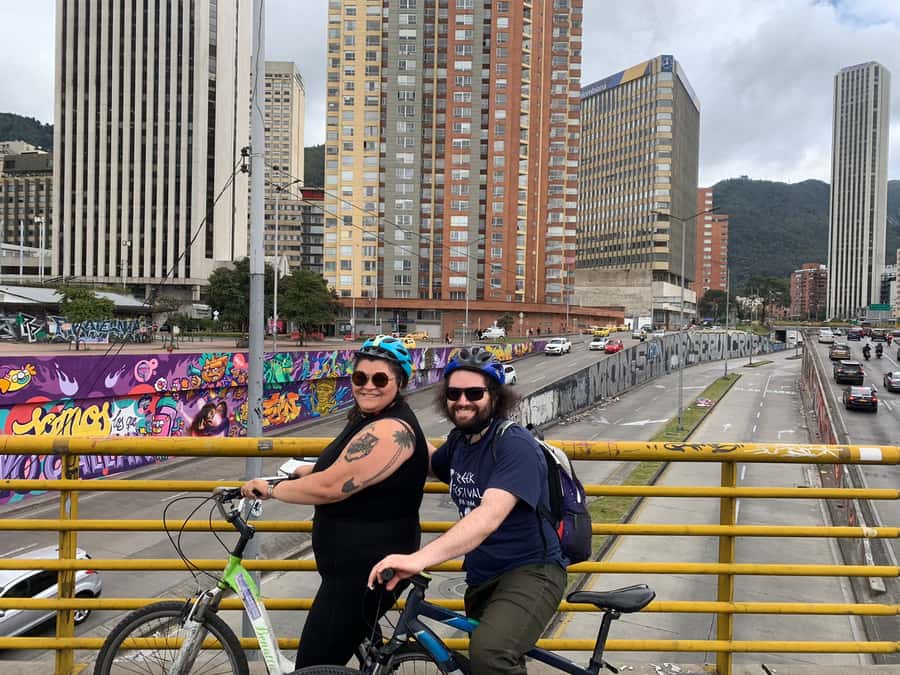
Bogotá’s walls tell stories worth pedaling toward. This three-hour bike tour links 13 kilometers of urban art across four central neighborhoods, combining murals, politics, architecture, and Colombia’s work toward peace. I like the way it uses bike lanes and, on Sundays, the city’s Ciclovía to show Bogotá as both an art capital and a cycling city. I also like the focus on female muralists and post-conflict art, subjects that give the route more weight than a simple photo stop.
The main consideration is distance. Thirteen kilometers is manageable for many active visitors, but this is still a cycling tour with several stops, not a slow walking circuit. The overall displayed rating is 3.2 from four reviews, although the two detailed reviews provided here give five stars, with Anne from Germany praising Diego’s explanations and Geraldo from the United States enjoying the guide’s strong connection to local communities.
In This Review
- Key Points Before You Pedal
- Starting at the Red Wall in La Candelaria
- Four Neighborhoods, Four Versions of Bogotá
- Seeing Bogotá Through Female Artists’ Walls
- Murals About Peace and Colombia’s Post-Conflict Work
- Why the Bicycle Changes the Experience
- A Coffee Factory Stop Adds a Useful Pause
- The Guide Makes or Breaks the Route
- Is $62 a Fair Price?
- Who Should Book This Bike Tour?
- Final Recommendation: Book If You Want Meaning With Your Murals
- FAQ
- Where does the Bogotá art bike tour start?
- How long is the tour?
- How far do you ride?
- Which neighborhoods does the tour visit?
- What languages are available?
- Does the tour operate in bad weather?
- What should I bring?
Key Points Before You Pedal
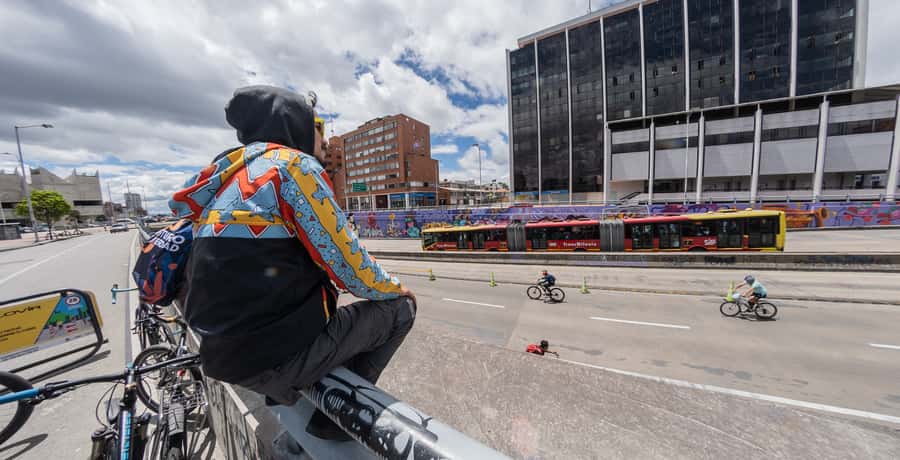
- A 13-kilometer route through four neighborhoods: You ride through Centro, Teusaquillo, Santa Fe, and La Macarena, seeing how the city changes from one area to the next.
- Street art with political meaning: The murals address cultural identity, social struggles, peace, and Colombia’s post-conflict period.
- A guide who is also an urban artist: Diego is specifically praised for explaining art, graffiti, and local history with energy and personal insight.
- Female artists receive attention: Several walls feature illustrations by women, adding a useful perspective to Bogotá’s public art scene.
- A coffee factory stop breaks up the ride: This gives the route a sensory pause between mural viewing and city cycling.
- Ciclovía Sundays add room to ride: On Sunday mornings, Bogotá closes or limits certain roads to motor traffic, creating more cycling space and cultural activity.
Starting at the Red Wall in La Candelaria
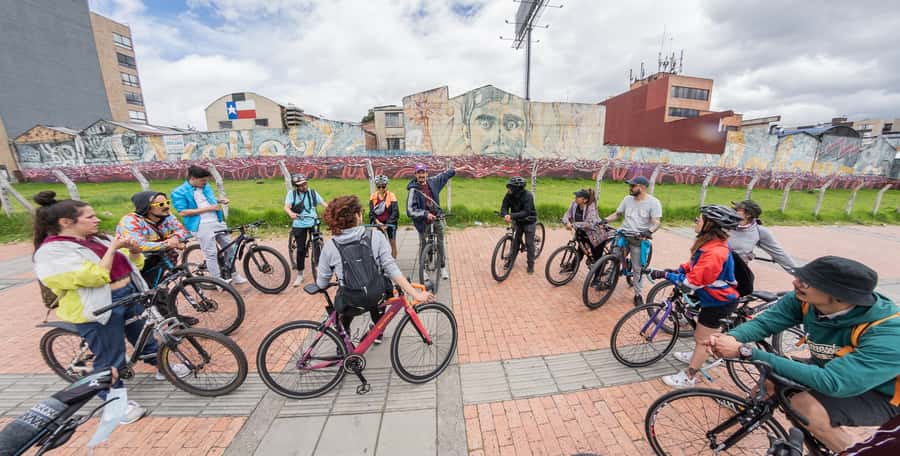
The tour begins in La Candelaria, Bogotá’s historic center, in front of the large red wall at Carrera 3 #12-52. Look for a guide wearing a purple hoodie or cap, or carrying a purple umbrella. That clear visual marker matters in a busy old-city district, where narrow streets and colorful façades can make a meeting point easy to miss.
La Candelaria is a sensible place to begin. The neighborhood brings together colonial architecture, steep streets, student life, political murals, and some of the city’s best-known graffiti. You start with context rather than simply rolling past painted walls. The guide explains how Bogotá’s street art movement developed and why public walls here often carry political or social messages.
I would arrive ready to ride, wearing sports shoes and carrying as little as possible. Backpacks and valuables are not allowed, so plan around that rule before you arrive. The information provided does not specify bike models, helmet arrangements, or storage, so you should confirm those details when booking if they matter to you.
More Bike Tours in Bogota
- Bogotá Bike Tour
★ 5.0 · 3,329 reviews - Bike Tour in La Candelaria Bogotá
★ 4.5 · 172 reviews - Bike Tour in Bogota Historical Sites and Fruit Market
★ 5.0 · 171 reviews
Four Neighborhoods, Four Versions of Bogotá
The route connects Centro, Teusaquillo, Santa Fe, and La Macarena. That sequence gives the tour its strongest urban lesson. You are not looking at murals in one isolated art district. You are moving through different parts of central Bogotá and seeing how art responds to each setting.
Centro offers the most immediate introduction to the city’s political voice. Here, street art may feel closely tied to public debate, local identity, and the daily pressure of urban life. The value of having a guide becomes clear at this point. A painted figure or slogan can look striking in a photograph, but its meaning may be lost without background on Colombia’s social struggles.
Santa Fe and La Macarena bring another set of contrasts. The route uses the city’s bike infrastructure to move between walls, streets, and architectural settings. You get a better sense of scale from a bicycle than from a vehicle. A mural that seems large in a photo can become much more impressive when you approach it along a city street and see how it fills an entire wall.
Teusaquillo adds another change in tone. The neighborhood helps connect urban design and architecture with the art itself. This is one reason the tour works well for visitors who want more than a collection of colorful backdrops. The guide links the murals to the streets and buildings around them, showing how public art becomes part of the neighborhood rather than a separate attraction.
The route covers about 13 kilometers, so expect steady movement between stops. The tour is scheduled for three hours, which leaves time for explanations and photos but does not allow unlimited lingering at every wall. If you want to photograph each mural in detail, you may need to balance camera time with the pace of the group.
Seeing Bogotá Through Female Artists’ Walls
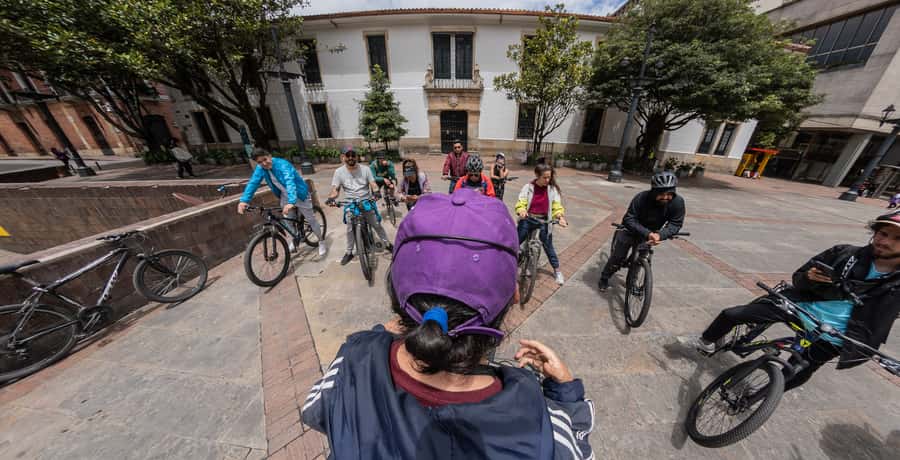
One of the tour’s most appealing details is its attention to walls created by female artists. Public art discussions can easily focus on the most famous names or the largest paintings, while women’s work receives less attention. This route makes a deliberate effort to show illustrations and murals by female artists, giving you a wider view of Bogotá’s creative scene.
I would pay close attention to the guide’s explanation of technique and authorship. A mural is not just a large picture. The choice of color, scale, symbols, and placement can change how a neighborhood sees itself. Learning who made the work and what the artist is trying to say gives you a better way to read other walls after the tour ends.
The information does not name the individual female artists, so do not expect a fixed list of names in advance. That is a good question to ask your guide during the tour. You may want to note the names of artists whose work interests you, since Bogotá’s street art changes over time and some walls do not remain untouched.
Murals About Peace and Colombia’s Post-Conflict Work
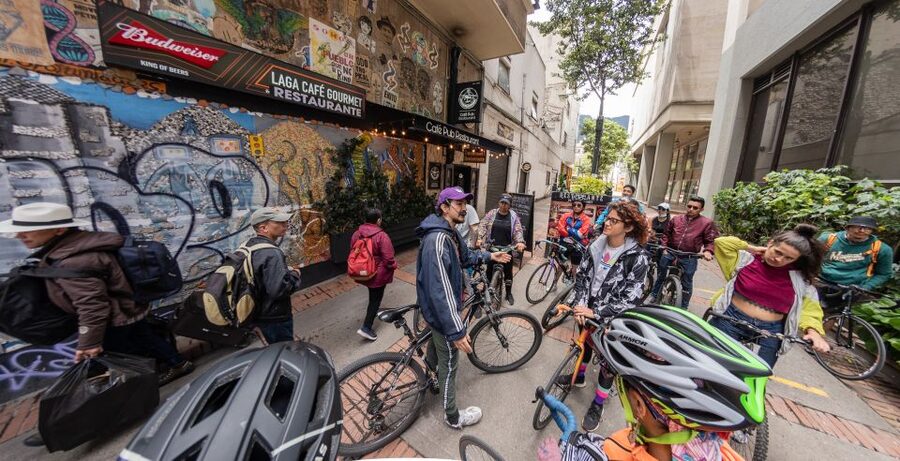
The tour includes a mural symbolizing peace and post-conflict. This is one of the most meaningful parts of the route because it connects street art with a major national issue. Colombia’s post-conflict period is not presented as a distant history lesson. It is treated as an ongoing social experiment involving peace, community work, and new forms of cooperation.
A mural about peace can be read quickly as a hopeful image, but the guide’s role is to explain the harder questions behind it. Who is represented? What kind of peace is being imagined? How does art help a city discuss violence, memory, reconciliation, and social change?
That context gives the tour substance. You are still enjoying a bike ride and looking at striking images, but the walls also become a way to understand Colombia beyond postcard scenery. Geraldo’s review is useful here: he specifically praised the guide’s connection to local communities and said the tour helped him learn about the neighborhoods and the people who make them special.
The subject may feel serious at times. That is part of its value, but it also means this is not purely a lighthearted sightseeing ride. If you want only playful designs and quick photographs, some of the political material may feel more demanding. If you want to understand how art reflects public life, this is a major strength.
A completely different kind of day:
- Bogota: Bicycle City Tour
★ 4.9 · 2,156 reviews - Zipaquirá: Salt Cathedral Group Tour with Pickup
★ 4.8 · 1,606 reviews - La Candelaria, Monserrate and Museums Bogotá Private City Tour
★ 5.0 · 1,567 reviews - Shared Tour of the Historic Candelaria in Bogotá
★ 5.0 · 1,551 reviews
Why the Bicycle Changes the Experience
A bicycle lets you cover far more ground than a walking tour while keeping you close to the street. You can move from one neighborhood to another without spending the day inside a bus or taxi. The route also uses Bogotá’s bike lanes, which makes the city’s cycling culture part of the subject rather than just a means of transport.
Sunday’s Ciclovía can make the ride especially appealing. On Sunday mornings, Bogotá opens more routes to cyclists and adds cultural activity around the city. The result is a different kind of urban outing, with more space for bikes and a stronger sense of the city enjoying itself outdoors.
The tradeoff is physical effort. You need to be comfortable cycling for three hours, including stops and city riding. The supplied information does not give a fitness grade, so I would not assume the route is designed for complete beginners. Sports shoes are required, and rain does not cancel the tour. A rain poncho is offered, but weather can still affect comfort, visibility, and the quality of photographs.
The guide’s pace will also matter. In a private or small group, you may have more opportunity to ask questions or adjust the rhythm. Larger groups can make stops feel less personal, although no maximum group size is provided. If discussion is important to you, select a small or private option when available.
A Coffee Factory Stop Adds a Useful Pause
The itinerary includes a stop at a coffee factory. This is a welcome change from looking upward at walls and riding through traffic. It gives you a chance to pause, connect the city’s creative life with one of Colombia’s best-known products, and reset before continuing along the route.
The information does not specify whether coffee tasting, a factory tour, or a purchase is included. Keep your expectations practical: treat it as a scheduled stop within the bike tour rather than assuming a full coffee workshop. Ask the guide what the stop includes if that detail affects your decision.
Its placement also helps the three-hour schedule. A continuous 13-kilometer ride could feel rushed or tiring, while a break creates a more varied experience. You get art, architecture, neighborhood history, cycling, and coffee rather than three straight hours of pedaling.
The Guide Makes or Breaks the Route
This experience depends heavily on the guide. The company describes its guides as passionate about street art, and the lead guide is also a recognized urban artist. That combination can add real value because the guide can discuss both the finished image and the practical choices behind making art in public spaces.
Diego receives specific praise in the available feedback. Anne described an exciting tour in which he explained art, graffiti, and history across several neighborhoods. Geraldo also praised the guide’s strong engagement with the local community. Those comments point to the most important feature of the experience: not simply seeing murals, but understanding how they fit into Bogotá’s life.
The tour is offered in English, Spanish, French, German, and Italian. That broad language choice is useful for a subject where small distinctions in history and symbolism matter. Even so, the quality of the experience will depend on the guide assigned that day, so it is worth confirming your preferred language when reserving.
Is $62 a Fair Price?
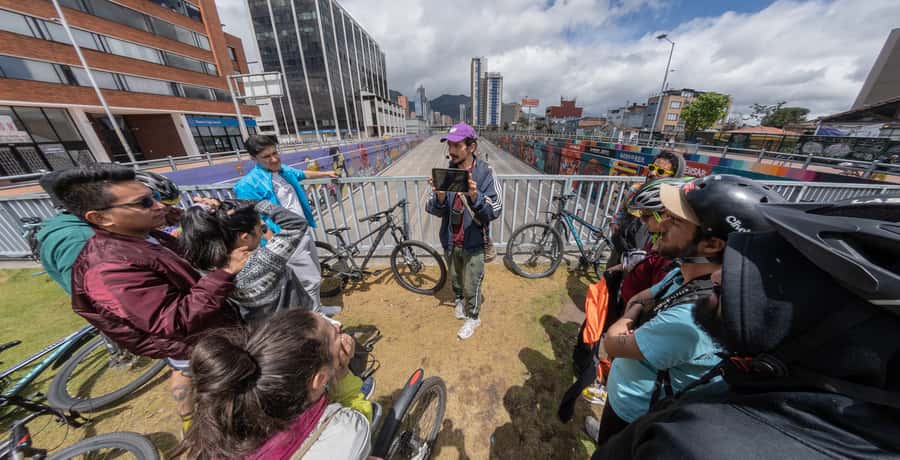
At $62 per person, the tour is not the cheapest way to see Bogotá’s street art. You could walk through parts of La Candelaria without paying for a guide, and public walls can be viewed for free. The price makes more sense when you count what the bike adds: transportation between four neighborhoods, a three-hour guided route, art interpretation, local history, a coffee factory stop, and access to a broader section of central Bogotá.
The value is strongest for visitors who want structure. You do not need to plan a route through 13 kilometers of bike trails or identify which murals are worth seeking out. You also receive explanations about female artists, political art, architecture, urbanization, and post-conflict Colombia, subjects that are difficult to gather from a casual walk.
The value is weaker if you already know Bogotá’s art scene, dislike group activities, or prefer to stop for long periods at each mural. In that case, a self-guided outing may give you more control. A private or small group can improve the experience, but it may also change the final cost, so check the booking details.
Free cancellation up to 24 hours before the tour and the reserve-now, pay-later option reduce the financial risk. Those policies are useful in Bogotá, where rain can affect a cycling day, although the tour itself operates rain or shine.
Who Should Book This Bike Tour?
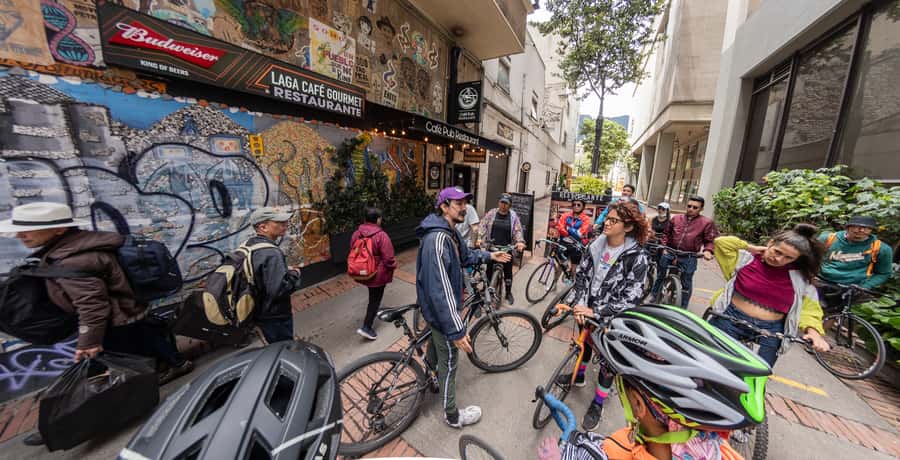
I would recommend this route to active visitors who want a cultural introduction to Bogotá without spending the whole day in museums. It suits people who enjoy photography, public art, urban history, social questions, and moving through a city under their own power.
It is also a good match for anyone visiting on a Sunday morning. The Ciclovía can make the ride feel more relaxed and gives you another look at Bogotá’s public life. Families with older children may enjoy it if everyone is comfortable with the distance, but the available information does not provide a minimum age or child-bike policy, so confirm before booking.
You may want to choose another activity if you cannot cycle 13 kilometers, need a highly predictable weather plan, or want a tour focused only on famous murals. This route asks you to think as well as look. Some of its best moments come from the stories behind the paint, not just the paint itself.
Final Recommendation: Book If You Want Meaning With Your Murals
I would book Biking in Full Color if you want Bogotá’s street art explained in its social and political setting. The strongest features are the four-neighborhood route, the attention to female artists, the peace mural, and the guide-led storytelling praised in the comments about Diego.
The $62 price is reasonable for a three-hour guided ride covering 13 kilometers, especially if you value local context and do not want to plan the route yourself. Go with sports shoes, leave the backpack and valuables behind, and prepare for rain. If you prefer a slower art walk, this may feel too active. If you want to see how Bogotá’s walls speak about creativity, conflict, and hope, it offers a thoughtful way to do so.
FAQ
Where does the Bogotá art bike tour start?
It starts in front of the large red wall at Carrera 3 #12-52 in La Candelaria. Look for a guide wearing a purple hoodie or cap, or carrying a purple umbrella.
How long is the tour?
The tour lasts three hours.
How far do you ride?
The route covers 13 kilometers of bike trails.
Which neighborhoods does the tour visit?
The route passes through Centro, Teusaquillo, Santa Fe, and La Macarena.
What languages are available?
The live tour guide may provide the experience in English, Spanish, French, German, or Italian.
Does the tour operate in bad weather?
Yes. The tour runs rain or shine, and a rain poncho is offered.
What should I bring?
Wear sports shoes. Backpacks and valuables are not allowed on the tour.
Just added in Bogota
- Tour of Zipaquirá: Visit the Salt Cathedral and the main squares★ 4.5 · 55 reviews
- Catedral de Sal desde Bogotá en Tren★ 5.0 · 5 reviews
- Zipaquirá and Salt Cathedral Muisca Heritage with Guide – Private★ 4.5 · 23 reviews
- Botanical Garden Bogotá Private Tour (4 Hrs.)★ 5.0 · 13 reviews
- Zipaquira Salt Cathedral★ 4.5 · 12 reviews
- LOCAL GUIDE Zipaquirá PRIVATE TOUR – Salt Cathedral and Salt Oven★ 5.0 · 24 reviews
- Zipaquirá Salt Cathedral: An architectural wonder.★ 4.5 · 24 reviews
- Private Zipaquira Salt Cathedral and Guatavita Lagoon Tour from Bogota★ 4.5 · 44 reviews
Cycling Tours, compared.
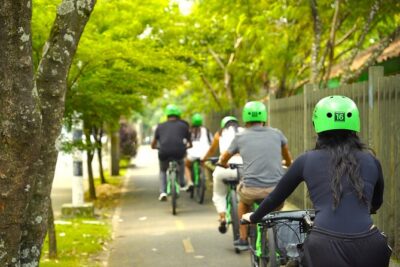
Half Day Bike Tour in Medellin – Local snack, Coffee or Beer
Read our review →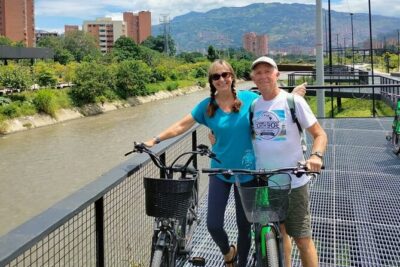
Electric Bike City Tour Medellin With Colombian Coffee and Snack
Read our review →
Medellín Essential: history & local life on E-bike
Read our review →
Local neighborhoods and included food on e-bike
Read our review →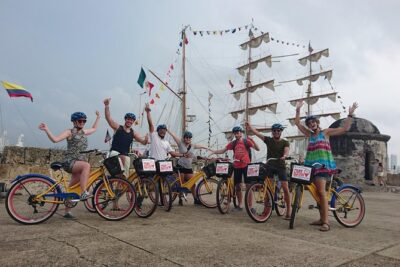
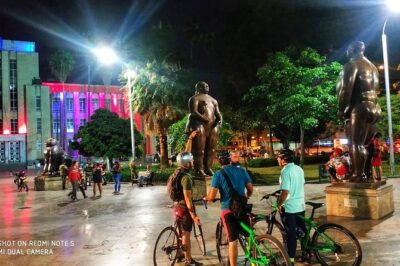
Night Bike Tour In Medellin, Typical Snacks, Beer and Spectacular Viewpoints
Read our review →
Browse the lists this tour appears in