
REVIEW · MEDELLÍN TOURS
Anti tour Medellin
Medellín has plenty to celebrate. This three-hour Anti Tour asks what progress erased, from old markets and railway traces to memories of violence and displacement. I like its focus on places ordinary city tours often pass by, and I like that the route includes a viche tasting and the Casa de la Memoria Museum. The main consideration is that parts of the walk pass through crowded, rougher central districts, so you should stay alert and follow the guide closely.
This is not a tour built around postcard views or cheerful city slogans. It is a guided look at how Medellín rebuilt itself by clearing away parts of its past. The English-speaking guide, including Manuel on some departures, connects demolished buildings, modern public projects, armed conflict, and daily street life in a way that gives the city more depth.
In This Review
- Key points to know before you book
- Why this is not a standard Medellín city tour
- Starting at Monumento a la Raza and La Alpujarra
- Parque de las Luces and the missing market square
- El Hueco: commerce without a polished script
- Palacio Nacional and La Veracruz
- Plaza Botero and the politics of public art
- Coltejer, Junín, and the city of progress
- La Playa and Casa de la Memoria
- What you get for $33
- How demanding and comfortable is the walk?
- Who should book the Anti Tour?
- Should you book it?
- FAQ
- Where does the Anti Tour Medellín begin?
- Where does the tour finish?
- How long does the tour last?
- What language is the tour conducted in?
- What is the price?
- Is viche included?
- Is the Casa de la Memoria Museum ticket included?
- Does the tour include transportation?
- Is the tour suitable for wheelchair users?
- What should I bring?
Key points to know before you book
- The tour asks what Medellín lost during its push toward modernity, using old buildings, new public spaces, and erased neighborhoods as evidence.
- You taste viche, a traditional Colombian liquor, during a stop connected with La Alpujarra and local culture.
- Casa de la Memoria is included, giving the tour a serious final chapter focused on Colombia’s armed conflict, victims, and remembrance.
- You walk through everyday central Medellín, including El Hueco, Parque de las Luces, Plaza Botero, and areas around the old city center.
- The route is led in English and lasts about three hours, with no transport to or from the meeting point included.
- The walk is not suitable for wheelchair users, and comfortable shoes, sun protection, water, and a little caution in crowded areas are sensible.
Why this is not a standard Medellín city tour
Many city tours explain what Medellín has built. This one spends more time asking what was removed to make that new city possible.
The idea is simple but uncomfortable. Medellín changed quickly through industrial growth, urban redevelopment, political decisions, and efforts to leave violence behind. In the process, much of the old center disappeared or became difficult to recognize. The Anti Tour uses that absence as its subject.
You still see major landmarks. But the guide’s attention falls on the layers beneath them. A modern library may occupy a place that once served a different public purpose. A shopping center may have replaced a government building. A forest of light poles may occupy a former market square. A colonial church may survive almost by accident.
I like this approach because it gives you a way to read the city rather than simply photograph it. You are not asked to admire every redevelopment project. You are encouraged to consider who benefited, what communities lost, and how public memory gets shaped.
The tone is serious, but it is not only about tragedy. You also see resilience, humor, commerce, art, and the daily energy of central Medellín. That balance matters. The city is not reduced to its violent past.
More things to do in Medellin:
- Medellin: Comuna 13 Graffiti Tour, Cable Car & Street Food
★ 4.8 · 9,046 reviews - Comuna 13 Graffiti Tour with Street Food
★ 5.0 · 7,503 reviews - Museo Pablo Escobar
★ 5.0 · 7,242 reviews
Starting at Monumento a la Raza and La Alpujarra
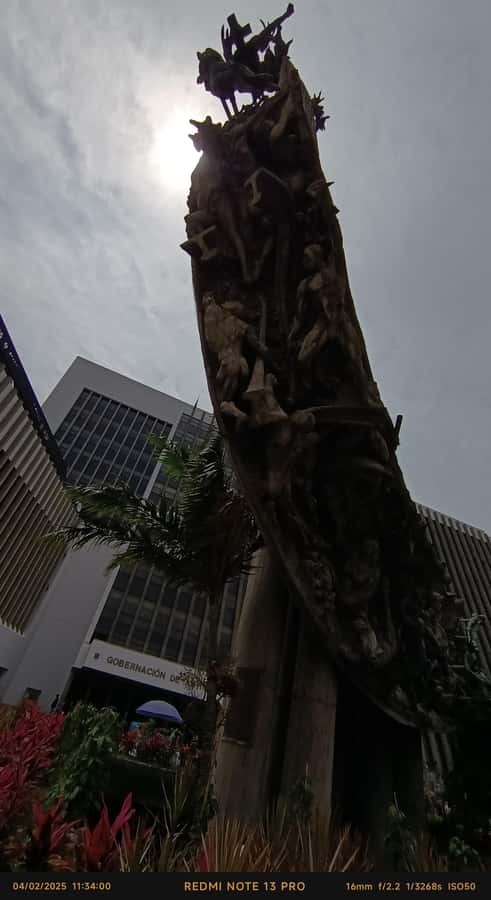
The meeting point is in front of the Monumento a la Raza, in La Alpujarra, Medellín’s political and administrative center. This is a practical place to begin because it puts you near institutions, public buildings, transport routes, and visible symbols of regional identity.
The monument provides an immediate lesson in power and belonging. From here, the guide sets up the central question of the walk: who gets represented in a city’s official story, and who disappears from it?
La Alpujarra also helps explain Medellín’s industrial and administrative growth. The area is linked with the city’s modern ambitions, but nearby traces of the old railway era point to an earlier phase of transformation. Industrialization connected Medellín to wider markets and helped create prosperity. It also encouraged major changes to the historic center.
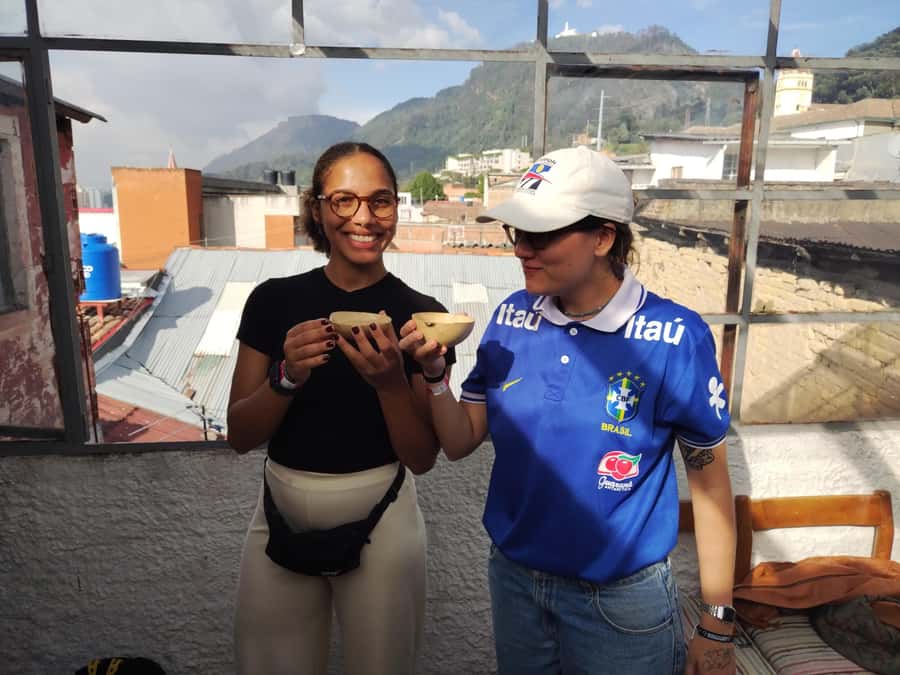
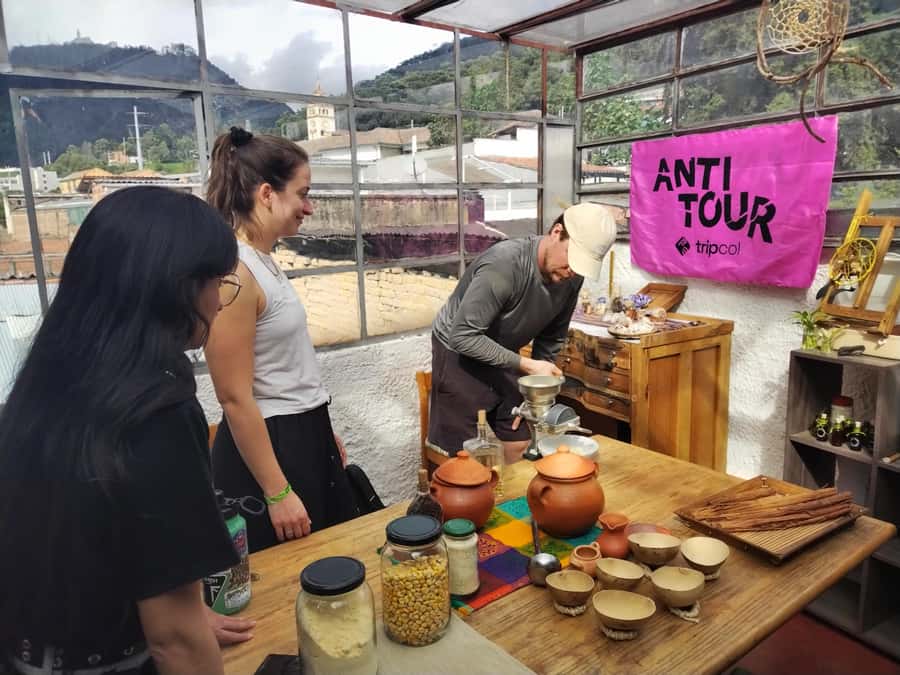
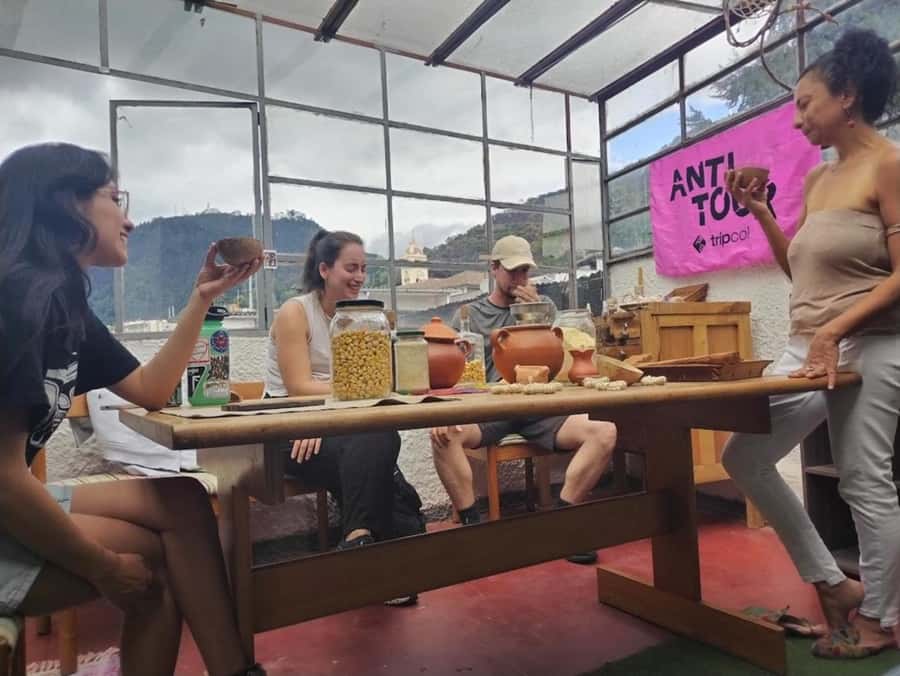
A 40-minute segment is listed for La Alpujarra, including a spirits tasting and workshop. The featured drink is viche, a traditional liquor. This is more than a quick sample poured into a plastic cup. Used well, the tasting gives the guide a chance to discuss regional traditions, cultural identity, and the difference between official urban branding and living local customs.
You should pace yourself here. The tour is not a bar crawl, and the tasting is only one part of a tightly scheduled walk. If you do not drink alcohol, the rest of the historical discussion remains the main attraction.
Parque de las Luces and the missing market square
The route continues toward Parque de las Luces, a public space filled with tall light poles. Today, the area feels modern and designed for movement, public gatherings, and visual impact.
The important detail is what came before. This was once a market square, with a different rhythm and a different set of users. The current design tells a story about renewal, but the absent market tells another story about displacement and changing ideas of order.
Nearby buildings such as the Carré and Vásquez help make the point. Their older facades recall an earlier commercial center, while newer structures such as the EPM Library represent Medellín’s attempt to project education, technology, and civic improvement.
I find this one of the strongest parts of the tour because the contrast is easy to see. You do not need a long lecture to understand that a city can preserve a facade while changing everything around it.
The guide’s job here is to connect architecture with social change. You may begin looking at poles, plazas, and building fronts. By the end of the stop, you are thinking about which version of the city those projects were designed to serve.
El Hueco: commerce without a polished script
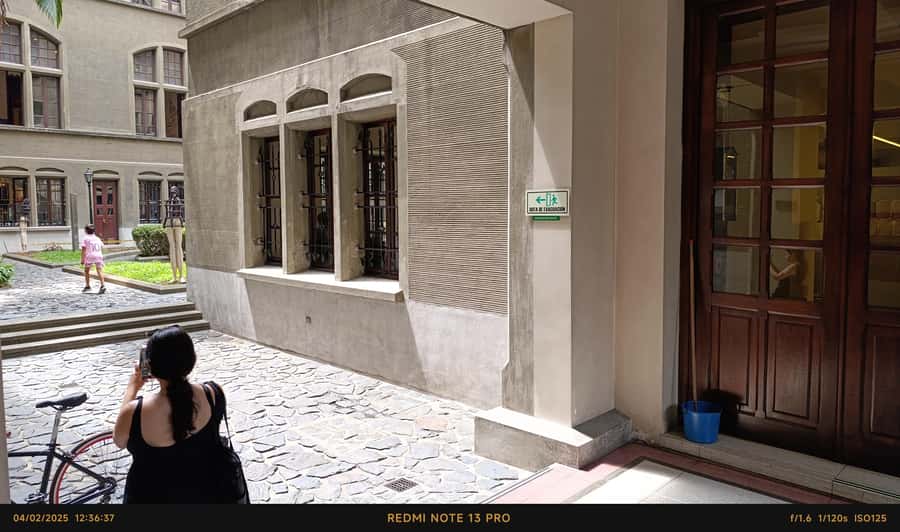
El Hueco is one of the route’s most revealing stops. This central commercial district is known for informal trade, crowds, music, and constant movement. It does not feel arranged for sightseeing, and that is precisely why it belongs on this tour.
You see fragments of older buildings beside anonymous modern construction. Stores, vendors, pedestrians, and street sounds create a picture of Medellín that is practical rather than polished. This is the city as people use it every day, not the city prepared for a promotional photograph.
The schedule allows about 15 minutes here, with a visit and scenic views along the way. That is enough for an introduction, but not enough to explore every corner. The short timing also means you should keep your belongings secure and avoid wandering away from the group.
One important caution comes directly from the nature of the area: this is a crowded commercial district, and some sections can feel uncomfortable or unsafe. One rating specifically noted that the route includes places where visitors should be warned in advance. I would not treat that as a reason to cancel, but I would take it seriously. Keep your phone put away when you do not need it, stay with the guide, and listen to local instructions.
This stop is valuable because it resists the idea that Medellín can be understood only through renovated plazas and famous art. You get a look at commerce, improvisation, and urban life that continues regardless of how the city is branded.
A completely different kind of day:
- Guatapé Tour: Piedra del Peñol with Boat Tour, Breakfast, Lunch
★ 5.0 · 7,035 reviews - Medellín: The Real Pablo Escobar Tour
★ 4.8 · 3,205 reviews - Day Trip To Guatapé with ,Breakfast, Lunch and Boat Ride
★ 5.0 · 2,996 reviews - Comuna 13 Graffitour knows the urban art district of Medellín
★ 5.0 · 2,856 reviews
Palacio Nacional and La Veracruz
The Palacio Nacional is another sharp example of changing urban purpose. Once a judicial palace, it now functions as a shopping center. That shift turns architecture into a lesson about power.
A courthouse carries authority through its institutions. A shopping center carries a different kind of influence, based on retail, property, and consumer activity. The building may remain, but its public meaning has changed.
The tour includes a visit to the Galería de Arte Palacio Nacional, with about 15 minutes for a guided stop. This is a useful place to pause because the building is not simply old or new. It shows how Medellín reuses familiar structures while changing what they mean.
Close by, the Church of La Veracruz offers a very different view of survival. It is one of the last colonial-era survivors in the area, surrounded by a city that has repeatedly rebuilt itself.
The church’s importance is not only religious or architectural. It gives you a physical point of comparison. Modern Medellín can look forward with great force, while La Veracruz quietly keeps part of the earlier city visible.
The listed visit lasts around 10 minutes. That is enough for a guided look, but do not expect a full architectural study or a long church tour. The value is in the contrast between the church and the surrounding center.
Plaza Botero and the politics of public art
Plaza Botero brings art into the conversation. Fernando Botero’s large sculptures attract attention immediately, but the Anti Tour treats the square as more than a photo stop.
The plaza helped redefine how people see central Medellín. Art, public space, tourism, and city identity meet here. The nearby Palacio de la Cultura Rafael Uribe Uribe adds another layer, with its ornate architecture and strong presence beside Botero’s rounded figures.
I like this section because it shows how culture can help rebrand a city. Public art may invite people back into an area, change outside perceptions, and provide a new civic image. But a new image does not erase what happened before it.
The guide connects Plaza Botero with the wider story of Medellín’s redevelopment. You can admire the sculptures and still ask who the new public space is for, how surrounding businesses changed, and what memories remain outside the frame of the photograph.
This is also one of the more familiar parts of the route, so it gives the walk a welcome visual pause. After the difficult discussion of demolition, commerce, and institutional change, the sculptures offer color and playfulness without turning the tour into a lighthearted sightseeing circuit.
Coltejer, Junín, and the city of progress
The Coltejer Building symbolizes Medellín’s industrial ambition. Its height and design make it a useful marker for the city’s economic confidence.
From here, the story moves toward Junín Street, once associated with elegant urban life. The street helps explain how commercial and social centers shift over time. Places that once defined a city’s fashionable identity can lose that role as development moves elsewhere.
This part of the walk is less about one specific building and more about the passage of time. Medellín’s progress brought jobs, construction, and new public projects. It also displaced older routines and changed who felt at home in the center.
You may find that this is where the Anti Tour differs most from a conventional architecture walk. The guide is not simply naming dates and styles. The aim is to connect buildings with class, commerce, public memory, and the city’s urge to appear modern.
La Playa and Casa de la Memoria
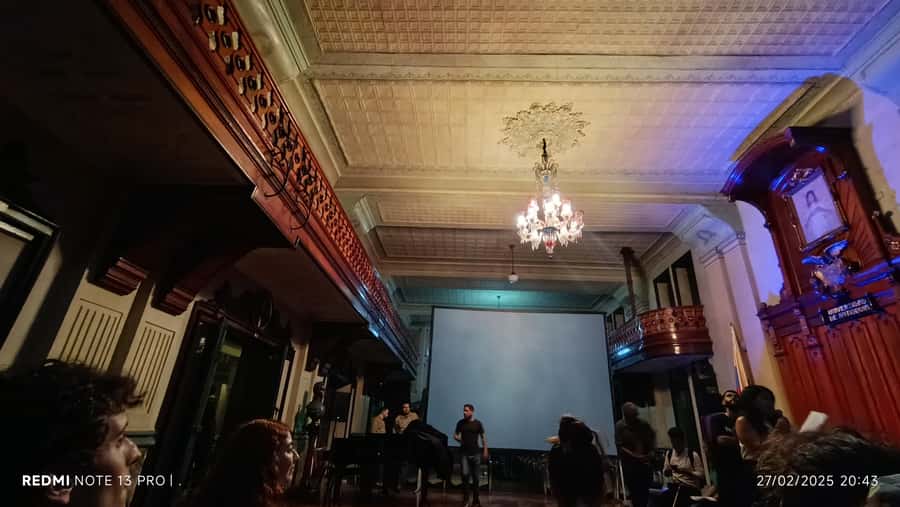
La Playa Avenue preserves traces of an older, more aristocratic Medellín. The area is associated with theaters, old mansions, and the remains of a more formal urban culture.
The Casa de la Memoria Museum gives the tour its most serious stop. A museum ticket is included, and about 30 minutes are set aside for the visit. The museum focuses on Colombia’s armed conflict, including violence, loss, and the experiences of victims.
The tour also highlights meetings with ex-combatants and victims of the conflict. The supplied details do not specify exactly how every departure handles those encounters, so you should confirm the format when booking. Still, the goal is clear: the past is presented through human experiences, not just dates, battles, and political names.
This is not a museum you rush through while checking off another attraction. Thirty minutes is enough for an introduction and reflection, but you may want additional time on another visit if the subject affects you strongly.
The museum changes the meaning of everything that came before. Demolished buildings are not only an architectural issue. Redevelopment, violence, displacement, and silence can overlap. The museum asks you to consider the people missing from official accounts and the cost of rebuilding without remembering.
The advertised finish is at the Parroquia de San Ignacio de Loyola. The route description also connects the final portion with La Playa and the museum. Since the exact order can shift, check the meeting and ending details on your confirmation and allow enough time after the three-hour schedule.
What you get for $33
At $33 per person, the Anti Tour is priced above a basic free walking tour tip, but it offers more than a standard orientation walk.
Your fee includes:
- An English-speaking live guide
- A guided walk through the old city center
- Visits around La Alpujarra, Parque de las Luces, El Hueco, and Plaza Botero
- The viche tasting
- Historical interpretation of old and modern buildings
- Admission to Casa de la Memoria Museum
The museum ticket alone adds value, but the strongest part of the price is the subject matter. You are paying for a focused interpretation of Medellín, not merely transport between landmarks.
The value depends on your interests. If you want a gentle introduction to food, viewpoints, and famous attractions, this may feel too serious. If you want to understand how the city was remade, $33 is reasonable for three hours of guided context and museum admission.
Transportation to the meeting point and away from the finish is not included. Plan that separately. The tour is conducted in English, which is useful if you want the explanations without relying on translation.
How demanding and comfortable is the walk?
You should wear comfortable walking shoes. The route covers central streets, public squares, commercial areas, and museum spaces, with no promise of a smooth or quiet path throughout.
Bring a hat, sunscreen, and water. Medellín’s weather can shift, so be prepared for sun and changing conditions. A small snack may also help, especially since the tasting is not a meal.
The experience is not suitable for wheelchair users. The combination of walking, crowded central streets, and the route’s physical setting may make access difficult.
A camera is welcome, but use it thoughtfully. Some locations are ordinary working areas rather than staged attractions. Ask before photographing people, and keep your attention on the guide during street crossings and crowded sections.
Who should book the Anti Tour?
I would recommend this tour to you if you:
- Prefer social and political history to a simple list of landmarks
- Want to see central Medellín as residents use it
- Are comfortable discussing violence, displacement, and memory
- Appreciate architecture as evidence of political and economic change
- Want an English-language walk with a museum visit included
- Have already seen the city’s more polished attractions and want a different angle
You may want another tour if you are traveling with young children who need light entertainment, have limited mobility, or want a relaxed route with little serious discussion.
The strongest praise for this experience centers on its emotional impact, complete coverage of central Medellín, and the guide’s ability to explain the city’s spirit of progress. Manuel is specifically praised for sharing his time and understanding in a way that made the walk feel unlike a traditional sightseeing outing.
Should you book it?
Book the Anti Tour Medellín if you want the city explained through its absences, contradictions, and hard memories. The viche tasting and famous plazas provide variety, but the real reason to go is the connection between redevelopment, daily life, and Colombia’s armed conflict.
I would not book it blindly if you dislike difficult subjects or feel uneasy in crowded central districts. Read the route as a serious urban history walk, stay with the guide, and plan for the full three hours.
For $33, the mix of guided interpretation, viche, central Medellín, and Casa de la Memoria offers solid value. It will not simply make you like the city more. It may help you understand it better, which is the point.
FAQ
Where does the Anti Tour Medellín begin?
The meeting point is in front of the Monumento a la Raza in La Alpujarra.
Where does the tour finish?
The stated finishing point is the Parroquia de San Ignacio de Loyola.
How long does the tour last?
The tour lasts three hours.
What language is the tour conducted in?
The live guided tour is conducted in English.
What is the price?
The price is $33 per person.
Is viche included?
Yes. A viche tasting is included as part of the experience.
Is the Casa de la Memoria Museum ticket included?
Yes. Admission to the Memory House Museum, also called Casa de la Memoria, is included.
Does the tour include transportation?
No. Transportation to and from the activity is not included.
Is the tour suitable for wheelchair users?
No. The activity is listed as not suitable for wheelchair users.
What should I bring?
Wear comfortable walking shoes and bring a hat, sunscreen, water, and possibly a snack. A camera is also recommended.
Just added in Medellin
- Tour Peñol-Guatape privado: con desayuno, almuerzo y bote★ 5.0 · 1 review
- Silletero Tour – From Medellín★ 5.0 · 1 review
- Tour Medellín: Commune13 and Pablo Escobar + Rooftop★ 5.0 · 2 reviews
- Tour Medellín: Pablo Escobar and Commune 13★ 5.0 · 3 reviews
- Medellin: Tour Pablo Escobar Privado Con Guia Local★ 5.0 · 1 review
- Tour Guatapé – Piedra del Peñol with departure from Medellín★ 5.0 · 24 reviews
- Tour Guatapé: luxury yacht to the stone of Peñol.★ 5.0 · 2 reviews
- Tour Guatapé con visita a Granja de las Llamas y las Alpacas★ 3.5 · 11 reviews
Medellín Tours, compared.

Comuna 13 Graffiti Tour, Cable Car & Street Food
Read our review →

Guatapé Tour: Piedra del Peñol with Boat Tour, Breakfast, Lunch
Read our review →
Day Trip To Guatapé with ,Breakfast, Lunch and Boat Ride
Read our review →
Comuna 13 Graffitour knows the urban art district of Medellín
Read our review →
Tour to Guatape, Piedra del Peñol, lunch, snacks boat trip
Read our review →
Half Day Bike Tour in Medellin – Local snack, Coffee or Beer
Read our review →